
Oct 9, 2026Customization
How to Choose Custom Packaging for Corporate Gifts
How to choose custom packaging for corporate gifts from China — packaging options and levels, structural decisions that drive cost, MOQ and timeline impact, and how to specify packaging for a quote.
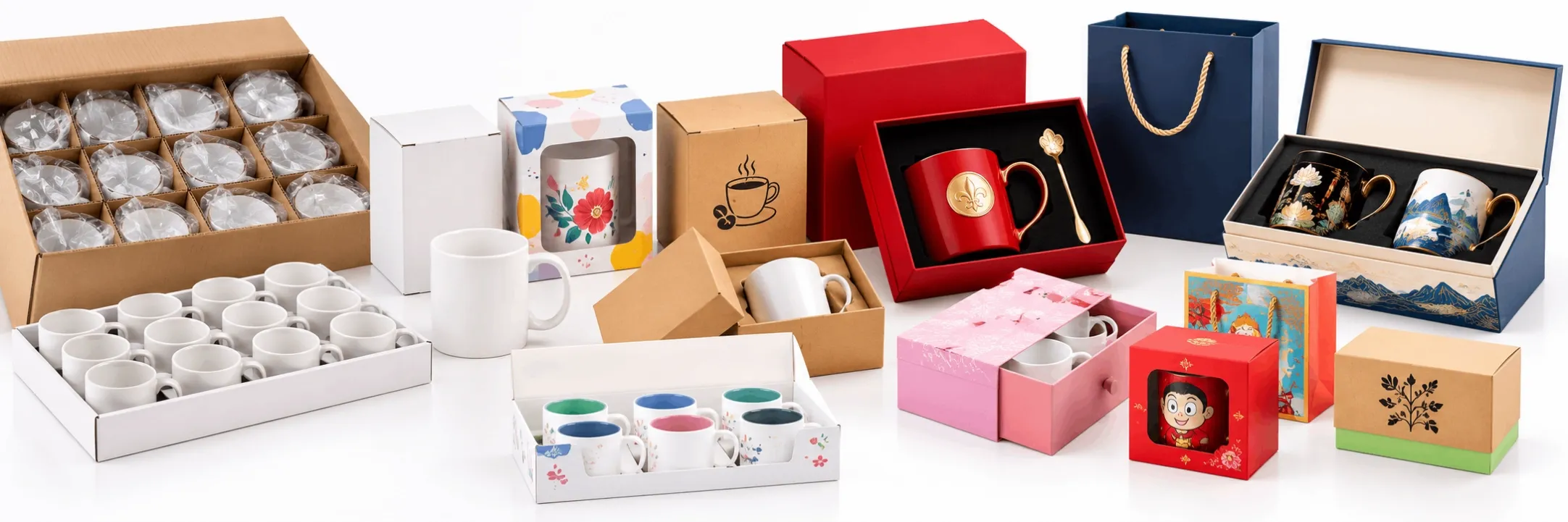
Custom packaging is where corporate gift projects most often run over budget — and also where they most often create the moment that makes a gift feel like a gift rather than a product with a logo. Getting it right means understanding what packaging actually is in a sourcing project: a second product with its own design, its own minimum order quantity, its own production timeline and its own logistics footprint.
This guide covers the packaging options available for corporate gifts sourced from China, what each costs in money and lead time, and how to choose the right level for your project.
Packaging Is a Second Product, Not an Accessory
The single most useful mental shift for buyers: packaging is not an add-on to your order — it is a second order that happens to ship together with the first. That means it has:
- Its own MOQ — often higher than the product inside it (custom rigid boxes commonly start at 1,000 pieces).
- Its own design and proofing process — structural design, print artwork, and a physical sample before production.
- Its own production timeline — typically one to three weeks, which must be scheduled against the product's production.
- Its own cost structure — materials, printing, and assembly (the insert that holds products in place is a constructed part, not a folded paper).
Buyers who plan packaging from the start get a project that lands on budget. Buyers who treat it as an afterthought discover, late in the project, that a custom box would add 30% to the unit cost and two weeks to the timeline.
The Packaging Options, From Simplest to Most Custom
Option | What It Is | Cost Level | Typical MOQ | Best For |
|---|---|---|---|---|
Standard packaging | The factory's default polybag or plain box | Often included at $0 | None extra | Functional giveaways, trade show bulk |
Branded label / sticker | Your logo on a label applied to the standard packaging | Very low per unit | Low (hundreds) | Cost-sensitive programs that still want brand presence |
Printed sleeve | A printed cardboard sleeve over a stock box | Low to moderate | Moderate (500–1,000) | Presentation on a budget; mid-tier client gifts |
Printed mailer / pouch | Custom-printed cardboard mailer or fabric pouch | Moderate | 500–1,000 | E-commerce style unboxing; apparel, textiles |
Custom rigid box | Structured box, printed, with a custom insert | High — can match or exceed the product cost | 1,000–3,000 | Premium client gifts, gift sets, VIP recognition |
Gift set assembly | Multiple products combined with insert into one presentation box | Highest (box + insert + labor) | Depends on box | Employee kits, welcome packs, multi-item client gifts |
Two rules of thumb: custom packaging typically adds 15–50% to the total per-unit cost depending on the level chosen, and the highest MOQ in a gift project is usually the packaging, not the product.
The Structural Decisions That Drive Packaging Cost
Two packaging examples can look identical in a photo and differ 3x in cost. The differences live in structure and materials:
Box Type
- Folding carton (paperboard box) — printed flat and folded at assembly. The most economical printed box; suitable for lighter items.
- Rigid box (set-up box) — thick board wrapped in printed paper, assembled at the factory. Substantially more expensive; creates the premium unboxing feel.
- Corrugated mailer — durable and shipping-friendly, printable inside and out. Good for products that ship directly to recipients.
Insert
The insert is what holds products in place and shapes the visual first impression. Options, in ascending cost:
- Paperboard folded insert — economical, holds lighter items, less premium.
- EVA foam or molded pulp — product-shaped cutouts, holds products securely with a premium look.
- Fabric-wrapped or flocked tray — the highest presentation level, common in executive gifts.
Finish
Surface finishes multiply cost quickly: matte lamination (standard), spot UV (gloss accents), foil stamping (metallic, often used for the logo), embossing/debossing (raised or recessed relief). Each finish is an additional production pass; two or three finishes on one box is common for premium gifts, each adding cost and lead time.
How Packaging Affects MOQ and Timeline
Packaging minimums come from the same economics as product minimums: printing plates, die-cut molds and material runs have fixed costs that need volume to absorb. Practical consequences for your project:
- If your product order is 500 pieces and the custom box MOQ is 1,000, your options (in order of preference for most projects): use a printed sleeve on a stock box, use a stock box with a custom label, or accept 1,000 boxes and use the surplus in the next project.
- Add packaging lead time to the critical path. Custom packaging typically needs its own sample approval and one to three weeks of production. It runs in parallel with product production, not after it — which means both must start early enough for both to finish before assembly and shipping.
- Plan for assembly time if you are combining products. If the project requires gift set assembly (products inserted into boxes with inserts), this is a manual operation that adds days depending on quantity and complexity.
Choosing the Right Packaging Level
Two questions decide the level: how will the gift be handed over, and how much does the packaging need to carry the brand?
Scenario | Recommended level | Why |
|---|---|---|
Trade show giveaways at volume | Standard packaging or branded label | Thousands of units; recipients keep the product, not the box |
Employee gifts distributed internally | Printed sleeve or mailer | Presentation matters but per-unit cost dominates |
Client gifts presented in person | Custom rigid box with simple insert | The handover is a brand moment; the box is part of the message |
VIP / executive recognition | Rigid box with premium insert and finish | Small quantity, maximum presentation per unit |
Multi-product gift set | Rigid or corrugated box with molded insert | The insert makes the set feel designed rather than bundled |
Gifts shipped direct to recipients' homes | Printed corrugated mailer | Must survive shipping as packaging; unboxing happens remotely |
What to Specify When Requesting Packaging Quotes
To get comparable quotes, provide these seven specifications:
- Box type — folding carton, rigid box, corrugated mailer, or pouch.
- Dimensions — inside dimensions of the product plus clearance; if the box holds multiple items, list them all with their sizes.
- Material and thickness — board weight or material grade, where you have a preference. "Same as this reference" with a photo works well.
- Print coverage and colors — full-color wrap, single-color logo, or plain with label. Pantone references for critical colors.
- Finish — matte/gloss lamination, spot UV, foil stamping (including where the foil goes), embossing.
- Insert — paperboard, foam, molded pulp or fabric; what products it must hold.
- Quantity and packing — how boxes ship (flat or assembled), which affects freight volume and cost.
One practical note: request the packaging and the product quotes together, from the same supplier or sourcing partner when possible. When packaging and product are quoted separately by parties who do not talk to each other, size mismatches and timeline gaps appear — a box that is 5mm too small for the finished product is a common and costly discovery.
Sustainability and Cost: What Buyers Ask Most
Recycled board, FSC-certified paper, soy-based inks and plastic-free inserts are increasingly requested — particularly for European corporate buyers and for companies with published sustainability commitments. Two practical notes:
- Specify it early. Sustainable materials can affect MOQ, lead time and cost, and switching material after the packaging sample is approved means repeating the sample.
- Be precise about what you need. "Recyclable FSC-certified board with water-based ink and a paperboard insert" is a specification; "eco-friendly packaging" is not, and producers will interpret it differently.
On cost, plastic-free packaging is not automatically more expensive in 2026 — paperboard and molded pulp are mature categories and often cost-competitive with foam. The bigger cost drivers remain box type, finish and insert construction.
Frequently Asked Questions
Does custom packaging increase the MOQ of my order?
Custom packaging has its own MOQ, which often exceeds the product's MOQ and can therefore set the effective minimum for the whole project. Common solutions when the box minimum is higher than your product quantity: printed sleeve on a stock box, or branded labels on standard packaging. Both deliver brand presence without the custom box minimum.
How much does custom packaging add to the cost?
Depending on level: a branded label adds a minimal per-unit cost; a printed sleeve adds a low-to-moderate amount; a custom rigid box with insert can add 30–50% or more to the total per-unit cost. Because the range is wide, decide the presentation level before selecting products — otherwise the packaging budget gets set by default rather than by decision.
How long does custom packaging take to produce?
Plan one to three weeks for production after artwork and sample approval, with custom rigid boxes at the longer end. The packaging timeline runs in parallel with product production, and both must finish before gift set assembly or shipping. For projects with a fixed event date, add a two-week buffer covering one packaging sample revision.
Should I use the same supplier for products and packaging?
When a sourcing partner coordinates both, they can verify fit between product and box, align timelines, and handle assembly and packing at one point. When the two are sourced separately, specify box inside dimensions yourself and confirm the fit with a physical sample — the cost of a size mismatch at assembly time is a full packaging re-run.
Is sustainable packaging more expensive?
Not necessarily. Recycled board, water-based inks and paperboard inserts are mature and widely available, and molded pulp competes with foam on cost. The cost of sustainable packaging depends more on the box structure and finish than on the sustainability specification itself. Specify the materials precisely, and include the requirement in the original quote request so the comparison stays like-for-like.
Next Step
Custom packaging decisions reduce to three choices: the level (label, sleeve, mailer or rigid box), the structure (box type, insert, finish), and the timing (sample and production scheduled in parallel with the products).
If your project includes packaging, send us your product list and presentation requirements — we will recommend the packaging level that fits your budget and handover context, confirm the MOQ implications, and quote packaging, products and assembly as one coordinated project. You can also see typical packaging applications in our product categories.