
Oct 8, 2026Buying Guides
Custom Promotional Products from China: Complete Buying Guide
A complete B2B buying guide to custom promotional products from China — product categories, customization methods and costs, MOQ and quote structure, sampling, packaging and the mistakes that cost buy
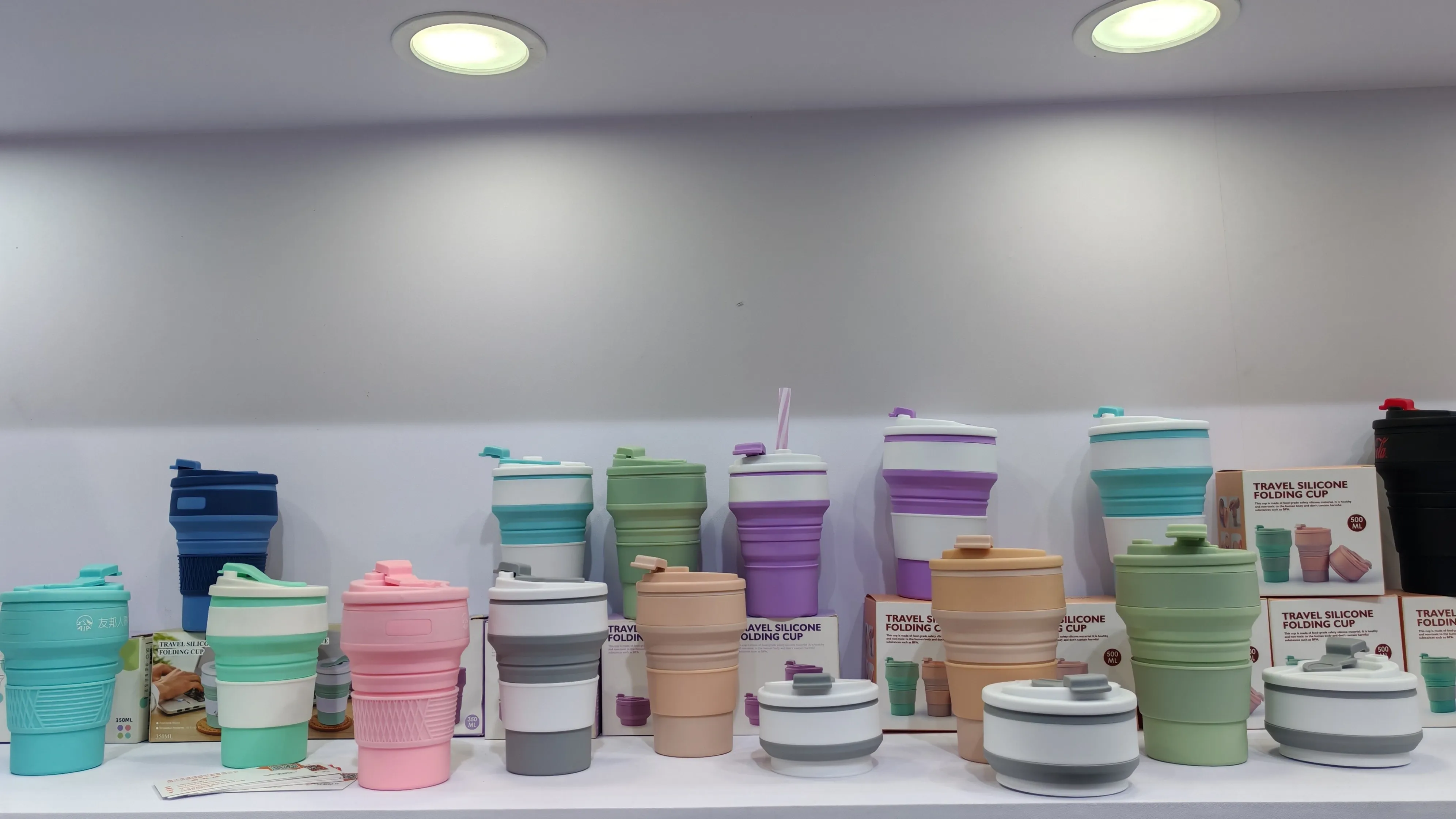
Buying custom promotional products from China is one of the most cost-effective ways for a company to put its brand in customers' hands. It is also one of the easiest ways to waste money — on products that look wrong in person, on logos that cannot be read, on packaging that costs more than the product inside, or on a shipment that arrives after the event it was ordered for.
This guide explains how the buying process actually works, in the order a buyer encounters it: choosing product categories, understanding what "custom" can mean for each type of product, comparing quotations correctly, and avoiding the mistakes that turn a good product into a bad order.
It is written for B2B buyers — companies ordering for employees, clients, events and campaigns — not for consumers buying single items.
What Counts as a Custom Promotional Product?
"Custom" means different things depending on who you ask, and that difference causes most of the confusion between buyers and suppliers. In promotional products, custom usually falls into one of four levels:
Level | What Changes | Typical Use | Unit Price Impact |
|---|---|---|---|
1. Stock product + logo | Your logo added to an existing product | Giveaways, trade shows, large-volume campaigns | Lowest |
2. Stock product + logo + packaging | Product stays standard; packaging becomes branded | Employee gifts, mid-tier client gifts | Low to moderate |
3. Modified product | Product color, material, trim or construction changed | Branded merchandise, campaign-specific items | Moderate to high |
4. Fully custom product | New design, new mold or new structure | Premium gift lines, signature merchandise | Highest; requires tooling |
Most corporate gift projects sit at level 1 or 2. Level 3 is common when a company wants the product to match brand colors exactly, or when a standard product almost works but not quite. Level 4 is rare and usually reserved for a flagship gift or a product the company intends to sell or distribute long-term.
When you request quotes, state the level you expect. "Custom" alone invites suppliers to quote level 1 while you are imagining level 3 — and the resulting price gap looks like overcharging instead of a specification mismatch.
The Main Product Categories and What Each Can Do
Promotional product categories behave very differently in customization, MOQ, cost and shipping. Knowing the category's typical constraints before shortlisting products saves rework later.
Drinkware
Stainless steel bottles and tumblers are among the most popular corporate gifts because they are used daily and stay visible for years. Key variables: capacity, material grade, lid type, surface finish (matte, glossy, powder-coated) and customization method — laser engraving for a permanent premium look, or printing for full-color logos. Engraving works better on powder-coated or brushed finishes; printing works better on smooth surfaces. Confirm the method matches the finish before approving artwork.
Office and Stationery
Notebooks, pens, desk accessories and sticky-note holders are the workhorses of corporate gifting: universally useful, widely available, and cost-effective at volume. Notebooks accept cover customization (embossing, foil, printed covers) and often inner-page customization as well — but note that inner-page printing usually carries its own MOQ and setup cost, separate from the cover. Pens are the most price-elastic category: unit cost can vary by more than 10x between a basic plastic pen and a metal gift pen.
Bags and Textiles
Tote bags, backpacks, gym bags and travel bags are high-visibility items. Textile customization usually means screen printing, embroidery, or a woven label. Embroidery carries a one-time digitizing fee and generally requires a simpler logo; screen printing handles fuller detail but is less durable on items that are washed frequently. Bag projects often have the widest spread between sample cost and bulk cost, because material and lining decisions are made during sampling.
Technology and Electronics
Power banks, wireless chargers, USB drives, and laptop accessories carry higher unit prices but strong perceived value. Electronics add constraints that other categories do not have: battery shipping regulations (which affect freight method and cost), certification requirements for the destination market, and functional areas where a logo cannot be placed. When customizing electronics, always confirm three things in writing: the certification valid for your destination market, the shipping method allowed for the battery, and the exact printable area on the product.
Gift Sets and Combinations
Many of the strongest corporate gifts are not single products but combinations — a notebook with a pen, a bottle with a tumbler, a set assembled in custom packaging. Gift sets let one order serve a higher perceived-value tier, but they multiply coordination work across suppliers. If you are considering a multi-product gift, our guide on sourcing multiple corporate gift products from China covers the workflow in detail.
How Customization Methods Differ (and What They Cost)
The customization method affects how your logo looks, how long it lasts, and what it costs. The four methods you will meet most often:
Method | Best For | Durability | Color Limits | Setup Cost |
|---|---|---|---|---|
Screen printing | Flat surfaces: bags, notebooks, some packaging | Good for most uses | 1–3 colors per print | Low (per color) |
Laser engraving | Metal, wood, leather; tumblers and pens | Permanent | Single-color (engraved look) | Low to moderate |
Heat transfer / UV printing | Curved or textured surfaces; full-color logos | Good, can wear with heavy use | Full color | Moderate |
Embroidery | Textiles: bags, caps, apparel | Very good | Limited color count; simpler shapes | One-time digitizing |
Two rules that prevent most logo problems:
- Match the method to the surface, not to the logo. A detailed multi-color logo that works beautifully in UV print may need simplification for screen printing or embroidery. Ask what the method can reproduce before finalizing artwork.
- Approve a physical sample of the actual method. A digital mockup shows placement; it does not show how the ink sits on the material, how the engraving reads at arm's length, or how the color behaves under indoor light. Physical samples catch inconsistencies that mockups hide.
MOQ, Pricing and How Quotes Are Actually Built
Promotional product pricing follows a quantity-tier structure. Unit price drops as quantity rises, because setup costs (mold, screen, plate, digitizing) and fixed production costs are spread across more units. Quotes typically show two or three tiers — for example 500 / 1,000 / 3,000 pieces — and the buyer's job is to find the tier where the unit price drop justifies the quantity increase.
MOQ is driven by the product and the customization, not by the supplier's preference. A standard item can have a low MOQ; the same item with a custom mold or custom packaging can have an MOQ several times higher. When comparing quotes for the same product from different suppliers, compare the MOQ as well — a lower unit price at a higher MOQ may require buying more than the project needs.
What a complete quote should include, so you can compare like with like:
- Unit price at each quantity tier, and what tier the quoted price applies to
- Setup costs (mold, screen, plate, digitizing) listed separately
- Customization cost per unit, per method
- Packaging: standard, branded, or custom — and the MOQ for each option
- Sample cost and production lead time
- Shipping terms and estimated cost, or the Incoterm the price is based on
- Certification and compliance documentation for the destination market, where relevant
A quote missing one of these items will produce a budget surprise later. When you request quotes, ask for the full breakdown up front — it is normal practice in China sourcing and any serious supplier can provide it.
Sampling and Production: What to Expect
Sampling is the step that decides whether your design works on the actual material. For a typical promotional product order:
- Sample cost: usually charged, and often credited back against the bulk order if it proceeds. For printed products, expect the logo setup cost to be charged with the sample.
- Sample time: roughly one to two weeks for a standard product with standard customization; longer for modified or fully custom products.
- What to check on arrival: product function, material feel, logo placement, logo size at realistic viewing distance, color against your brand reference, and packaging if included.
- What to put in writing: your approval should specify the exact approved version — product, color, logo file, method, packaging — so production matching that sample has a clear standard.
After sample approval, production typically takes three to five weeks for standard products. The most common production surprise is not a delay but a variation: a product matches the sample in every respect except color tone, because the production material batch differs slightly from the sample batch. The way to prevent this is to set an explicit tolerance at sample approval — for example, matching to the approved Pantone for logo color, and accepting the agreed material color range for the product itself.
Packaging: The Cost Most Buyers Underestimate
Packaging is where promotional product projects most often exceed budget, because buyers plan for the product and forget that packaging is a second purchase with its own design, MOQ and quality level.
The main options, from simplest to most custom:
- Standard packaging as supplied — the product's default polybag or box. Cheapest, no branding, not suitable for presentation gifts.
- Custom label or sticker on standard packaging — low cost, low MOQ, adds brand presence without a custom box.
- Printed sleeve over a stock box — mid cost; gives a branded look without a fully custom box structure.
- Fully custom box — printed structure, inserts, the works. Highest cost and usually the highest MOQ; typically 1,000 pieces or more for custom structures.
Two decisions to make early: whether the gift will be handed over in person (which justifies presentation packaging), and whether the packaging must match the brand system exactly (which usually requires custom). If the answer to both is no, a label or sleeve usually delivers the right result at a fraction of the cost. For the full decision framework, see our guide on sourcing corporate gifts from China, which covers packaging as part of the complete project.
The Mistakes That Cost Buyers the Most
Comparing unit prices from different specifications. Two quotes for "1,000 customized tumblers" can differ by 40% because one is double-walled vacuum-insulated steel and the other is single-wall with a printed wrap. Compare specification sheets, not product names.
Choosing the product before the budget split. Products, customization, packaging and shipping come from one budget. Late packaging and freight costs are what push projects over; plan the total split before shortlisting products.
Approving a digital mockup as the production standard. Mockups hide material behavior, print quality and color shifts. Approve a physical sample, and document it in writing.
Leaving enough time only for production. Production is one segment of the timeline; sampling, packaging production and shipping add up. For projects with a fixed event date, plan backward from the event with a buffer.
Forgetting certification for electronics. Electronics for a regulated market need valid certification; discovering this at shipping stage forces delays or re-documentation. Confirm certification at quoting stage.
Next Steps
Buying custom promotional products from China comes down to four disciplines: specify the customization level clearly, match the method to the product surface, compare complete quotes rather than unit prices, and approve a physical sample before production.
If you have a product category, a quantity and a rough budget, the fastest way forward is a specification review. Browse our custom promotional products by category, or send us your requirement — we will review the specifications, flag MOQ or packaging constraints, and come back with a complete quote covering product, customization, packaging and delivery.