
Oct 8, 2026Buying Guides
What Is the MOQ for Custom Promotional Products?
MOQ for custom promotional products explained — why minimums differ by product, customization and packaging, typical ranges by category, and six practical ways to work below MOQ.
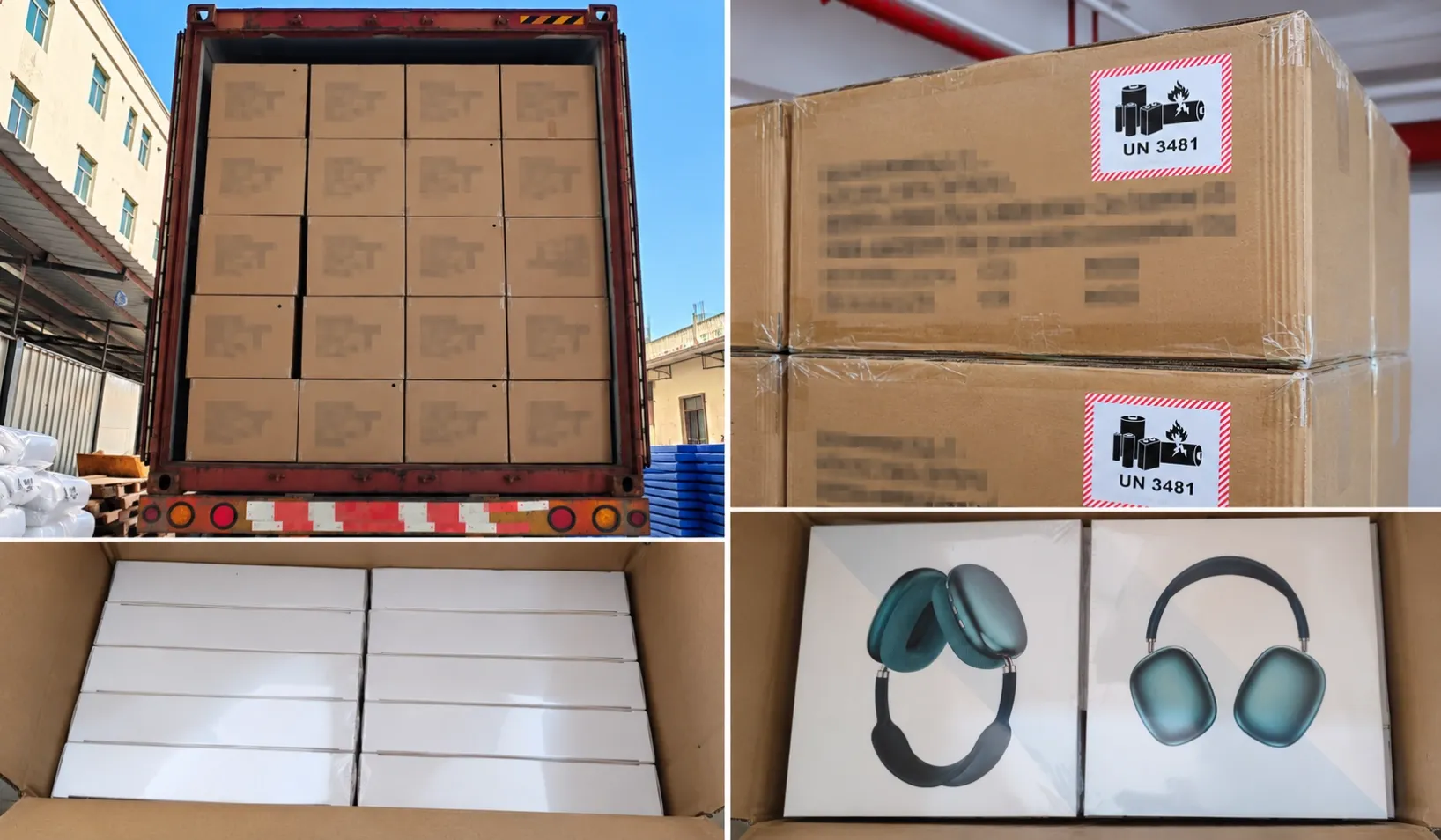
MOQ — minimum order quantity — is the first number most buyers ask about, and the one most often misunderstood. "What is your MOQ?" sounds like a simple question, but the answer depends on which MOQ you mean, because a single corporate gift order contains several of them.
This guide explains where MOQ comes from, what it looks like across common promotional product categories, and — most usefully — the practical ways to work with it when your order quantity is below the minimum.
What MOQ Actually Means
MOQ is the smallest quantity a factory or supplier will produce for a given product and specification. Below that number, production is not economic for the factory, because the costs of setting up a line — machine time, material minimums, labor setup, quality checks — are spread across too few units.
The critical point: MOQ is not one number. It is a set of numbers that change with the specification. A single gift project can involve four separate minimums:
MOQ Type | What It Applies To | Typically Driven By |
|---|---|---|
Product MOQ | The base product in its standard form | Factory's minimum production run for that item |
Customization MOQ | Applying your logo or design | Setup for the method: screen, plate, mold, precision fixture |
Material MOQ | Non-standard color, fabric or component | The minimum the material supplier will sell (e.g. a custom-dyed fabric roll) |
Packaging MOQ | Custom boxes, printed sleeves, inserts | The packaging factory's minimum run — often higher than the product's |
When a supplier quotes "MOQ: 500," they usually mean the product MOQ in its standard form with standard customization. Change any variable — a custom color, an engraved logo, a printed box — and a different MOQ applies. This is why the same product can be quoted with different minimums by different suppliers: they are quoting different specifications.
Typical MOQ Ranges by Product Category
Exact numbers vary by factory, specification and season, but the ranges below reflect what buyers typically encounter for custom orders. They are useful for planning before you contact suppliers.
Category | Typical MOQ (standard + logo) | Notes |
|---|---|---|
Pens, lanyards, small giveaways | 500 – 1,000 pcs | Low unit cost; customization setup is the main minimum driver |
Notebooks, stationery | 100 – 1,000 pcs | Cover customization standard; inner-page printing has its own MOQ |
Drinkware (tumblers, bottles) | 100 – 1,000 pcs | Lower MOQs common for stock colors; custom colors raise it |
Bags and textiles | 500 – 1,000 pcs | Embroidery digitizing is one-time; fabric customization raises MOQ |
Technology (power banks, chargers) | 100 – 1,000 pcs | Certification work adds fixed cost, which raises practical minimums |
Custom gift boxes / packaging | 1,000 – 3,000 pcs | Frequently the highest MOQ in the project |
Fully custom molded products | 1,000 – 5,000 pcs | Dominated by tooling investment; often justified only at scale |
Two patterns stand out. First, custom packaging usually carries the highest MOQ in a gift project — commonly higher than the product inside it. Second, customization setup, not the product itself, is often the real minimum driver: the factory can physically make 200 pieces, but the setup cost per piece at 200 pieces would make the unit price unacceptable.
Why MOQ Exists (Understanding It Makes It Negotiable)
MOQ is a cost structure, not a rule of nature. It comes from four sources:
- Production setup. Machines must be configured, materials loaded, and the first articles checked. This cost is roughly fixed — so it is spread over the run. At 500 pieces it might be $0.50 per piece; at 200 pieces the same cost becomes $1.25 per piece, and the factory would have to charge more per unit.
- Material minimums. Component suppliers and fabric mills have their own minimums. A factory ordering custom-dyed fabric must buy the mill's minimum roll regardless of how many finished products the roll makes.
- Tooling and molds. A new mold is a one-time cost. A supplier will not invest in a mold for a run too small to amortize it.
- Opportunity cost. Factory lines have finite capacity. A small custom run occupies a line that could produce a larger order, so factories set minimums to prioritize.
Because MOQ comes from cost structure, it moves when the cost structure moves — which is exactly why some minimums can be reduced and others cannot.
What to Do When Your Quantity Is Below MOQ
This is the practical heart of the issue: you need 300 pieces, the factory's minimum is 1,000. You have six options.
Option 1: Raise the Quantity (and Use the Surplus)
Order the MOQ and use the extra units in future projects. This works well for products your company uses repeatedly — pens, notebooks, bottles, tote bags — where surplus becomes next quarter's stock instead of dead inventory. Ask the supplier how long the product and custom logo will remain available for reorders, and whether the setup fee is waived on repeat orders of the same specification.
Option 2: Accept a Higher Unit Price at Lower Quantity
Many factories will produce below MOQ at a higher per-unit cost — sometimes called a "small order surcharge" or "low quantity fee." Ask for a quote at your exact quantity rather than assuming the published MOQ is absolute. The surcharge is usually a percentage added to the unit price, and it is often worth paying when the alternative is unnecessary inventory.
Option 3: Change the Specification
MOQ is specification-dependent, so changing the specification changes the minimum. Practical moves:
- Choose a stock color instead of a custom color — removes the material minimum.
- Use a standard packaging option with a branded label instead of a fully custom box — often cuts the highest MOQ in the project.
- Simplify the logo treatment — a one-color screen print usually has a lower setup minimum than a multi-color or molded logo.
- Choose a product with a higher-margin, lower-MOQ base — some factories specialize in smaller custom runs.
Option 4: Split the Project Across Products
If you need 300 sets and each product's MOQ is 500, restructure so the higher-MOQ items are shared: use one product at the higher quantity across two campaigns, or adjust the mix so each product meets its own minimum while the total set count stays at 300.
Option 5: Use a Sourcing Partner with Aggregation
Sourcing partners consolidate orders from multiple buyers and place larger combined orders with factories, which can reduce effective minimums for a single buyer. This is one of the clearest practical advantages of a sourcing partner for smaller projects: the buyer gets access to factory pricing without meeting factory minimums alone.
Option 6: Rethink the Product
Sometimes the honest answer is that the product's economics do not fit the quantity. A fully custom molded product at 200 pieces is rarely workable; a stock product at 200 pieces usually is. Before committing to a custom specification, check the minimums of the standard alternatives — they often come in at a fraction of the custom minimum while delivering most of the branding value.
MOQ and Pricing: How the Two Interact
MOQ and unit price are two ends of one equation: the factory's fixed cost per run divided by quantity, plus variable cost per unit. This produces the standard quantity-tier pricing you see in quotes:
Quantity Tier | Unit Price | What Happens to Setup Cost |
|---|---|---|
500 pcs | Highest per unit | Setup cost spread over 500 pieces |
1,000 pcs | Lower | Same setup spread over 1,000 pieces |
3,000 pcs | Lower again | Setup becomes negligible; material buying improves |
Two practical implications:
- Compare quotes at the same quantity tier. A supplier quoting at 3,000 pieces will look cheaper than one quoting at 500 — that is not a like-for-like comparison.
- Ask for the tier breakpoint. Increasing from 500 to 700 pieces sometimes costs only marginally more in total, because you move to a better tier. Ask "what is the next price breakpoint?" — it frequently reveals that a small quantity increase buys protection against running short.
MOQ in a Multi-Product Gift Project
In a gift project combining several products, each product's MOQ applies independently, and the project quantity must satisfy the highest relevant minimum — usually the packaging. A worked example: you need 500 gift sets of a notebook, a pen, a tumbler and a custom box.
Item | Your Need | Supplier MOQ | Resolution Options |
|---|---|---|---|
Notebook | 500 | 500 | Fits |
Pen | 500 | 1,000 | Order 1,000 and stock surplus; or find a lower-MOQ supplier |
Tumbler | 500 | 300 | Fits |
Custom box | 500 | 1,000 | Use stock box + printed label; or accept 1,000 boxes |
The planning sequence is: list each item's MOQ alongside your required quantity, identify conflicts, then resolve them before ordering — not after three products are in production. Our guide to sourcing multiple corporate gift products walks through this workflow in detail.
Questions to Ask Suppliers About MOQ
Ask these five questions when requesting a quote, and MOQ surprises disappear:
- "What is the MOQ for the standard product, and what is it with my specification?" — establishes both numbers and the gap between them.
- "Which part of my specification raises the MOQ?" — identifies whether it is the custom color, the logo method or the packaging.
- "If I order below MOQ, what is the price at my quantity?" — the low-quantity surcharge is often more acceptable than buyers assume.
- "What are the price breakpoints above and below my quantity?" — shows whether a small increase improves the tier.
- "What is the MOQ for the packaging separately from the product?" — packaging is where the highest minimum usually hides.
Frequently Asked Questions
Can I order custom promotional products below MOQ?
Sometimes. Many factories accept smaller runs at a higher unit price (a low-quantity surcharge), particularly for stock products with simple logo customization. Below-MOQ orders are least likely for custom molds, custom colors and custom packaging, where fixed setup costs dominate. The reliable way to know is to ask for a quote at your exact quantity.
Does a higher MOQ mean a lower unit price?
Generally yes — setup and fixed costs spread across more units. The reduction is most pronounced at the first breakpoints (500 to 1,000, for example) and flattens as quantity grows further, because material and labor costs are variable.
Why is the packaging MOQ higher than the product MOQ?
Custom box production involves printing plates, die-cut molds and material runs with their own minimums, and packaging factories often serve large-volume clients. The result is that a custom box can require 1,000–3,000 pieces even when the product inside only requires 500. Using a stock box with a printed label or sleeve avoids this minimum in most projects.
Is MOQ negotiable?
The minimum itself is usually a cost-driven number, but the effective minimum for your order is negotiable in several ways: asking for a below-MOQ quote with a surcharge, switching to a lower-minimum specification, ordering the surplus for future use, or working through a sourcing partner that aggregates demand. Approach it as a cost conversation rather than a yes/no request.
What is a typical MOQ for a corporate gift project?
For a gift set combining standard products with logo customization and branded packaging, a total project quantity in the range of a few hundred to a few thousand sets is typical. The practical governing number is usually the packaging minimum — check it first, because it sets the floor for the whole project.
Next Step
MOQ is a specification conversation, not a fixed wall. Identify which MOQ applies to which element of your order, ask for quotes at your actual quantity, and choose the specification that fits your economics — stock color, standard packaging, or a lower-minimum product are usually available.
If you have a quantity and a product in mind, send us your requirement — we will confirm the MOQs item by item, flag any conflicts early, and quote at your exact quantity. You can also browse our product categories to see typical minimum ranges before you decide.