Bags & Travel Gifts
Custom Jute Bags | Natural Burlap Tote Bags for Bulk Orders
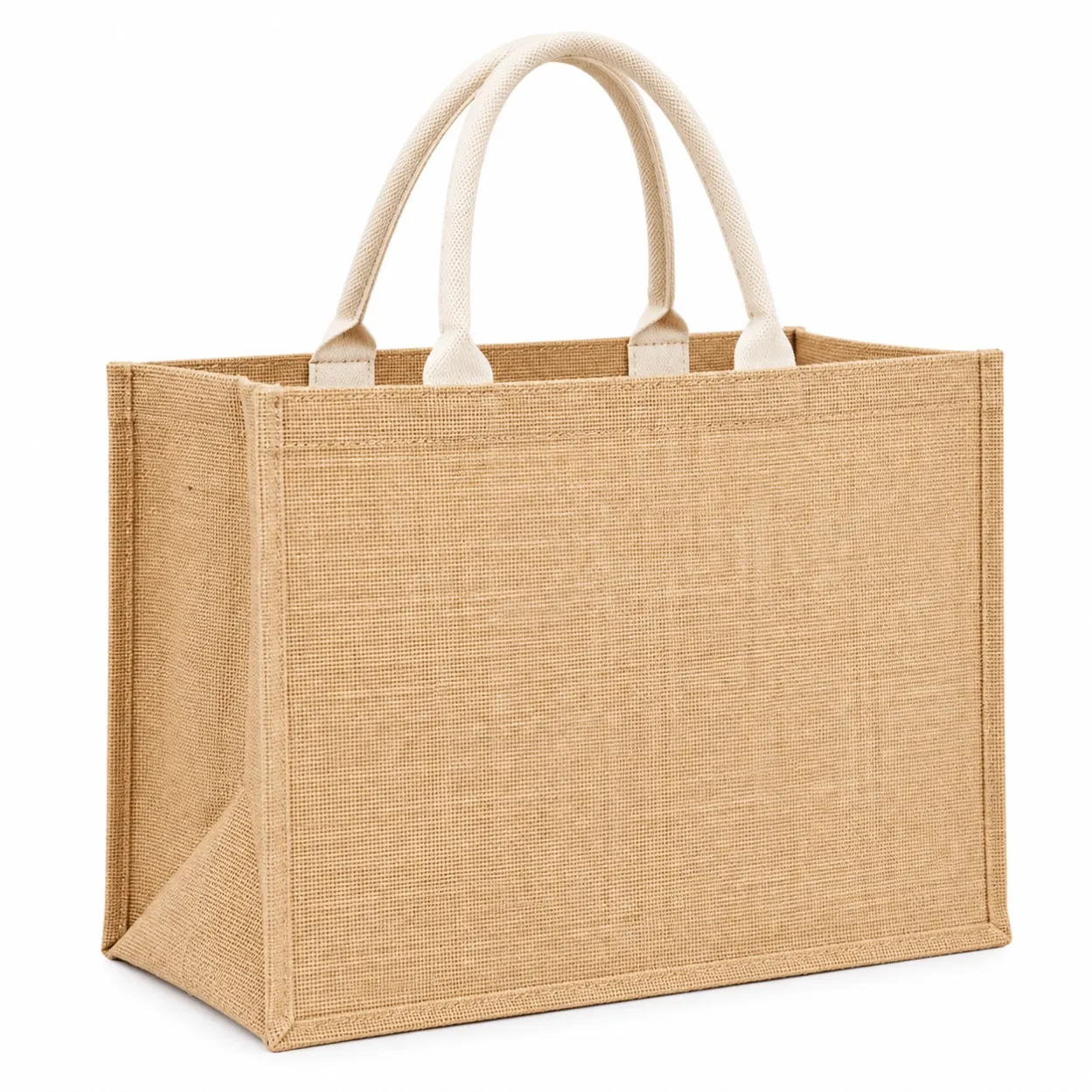
Custom jute bags and burlap tote bags for bulk orders. Four gusseted sizes from 20x20x10 to 45x35x16 cm, five stock colours plus custom, and screen printing, heat transfer, digital printing or embroidery with logo.
Custom Jute Bags: Natural Burlap Tote Bags for Bulk Orders
A custom jute bag is the clearest material statement a promotional program can make. The fibre is visible, the texture is unmistakable, and the natural tan colour does the work that no printed claim can: it shows the material is what it says it is. That is why burlap jute bags dominate gift packaging, boutique retail, farm-shop and organic brands, and why they have held that position while dozens of other "eco" materials came and went.
This range covers the standard gusseted tote construction that most B2B programs need, in four sizes from a small gift bag to a large shopping tote, five stock colours plus custom, and four printing methods. It is built for distributors, agencies and corporate buyers ordering in bulk — not for single-unit retail.
Why Jute Bags Work in Corporate and Retail Programs
- The material carries the message. A jute bag signals natural, renewable and reusable without a word of copy. For brands positioning on sustainability, that is worth more than any printed claim.
- Extremely cost-effective at volume. Jute is an inexpensive fibre and the construction is simple, which puts a genuinely good-looking bag within reach of large-volume programs.
- Structurally strong. The coarse weave and heavier fabric hold a boxed shape and carry real weight — a jute bag full of products does not sag the way a light canvas bag does.
- Gift packaging that doubles as a gift. The bag is the wrapper and the keepsake in one, which is why it dominates holiday and retail gift packaging.
- Biodegradable and recyclable. At end of life the bag returns to the material cycle, which matters for programs making disposal claims.
- Reorderable specification. Standard sizes and constructions keep their tooling, so a seasonal program can restock without a new sampling round.
Sizes and Weights
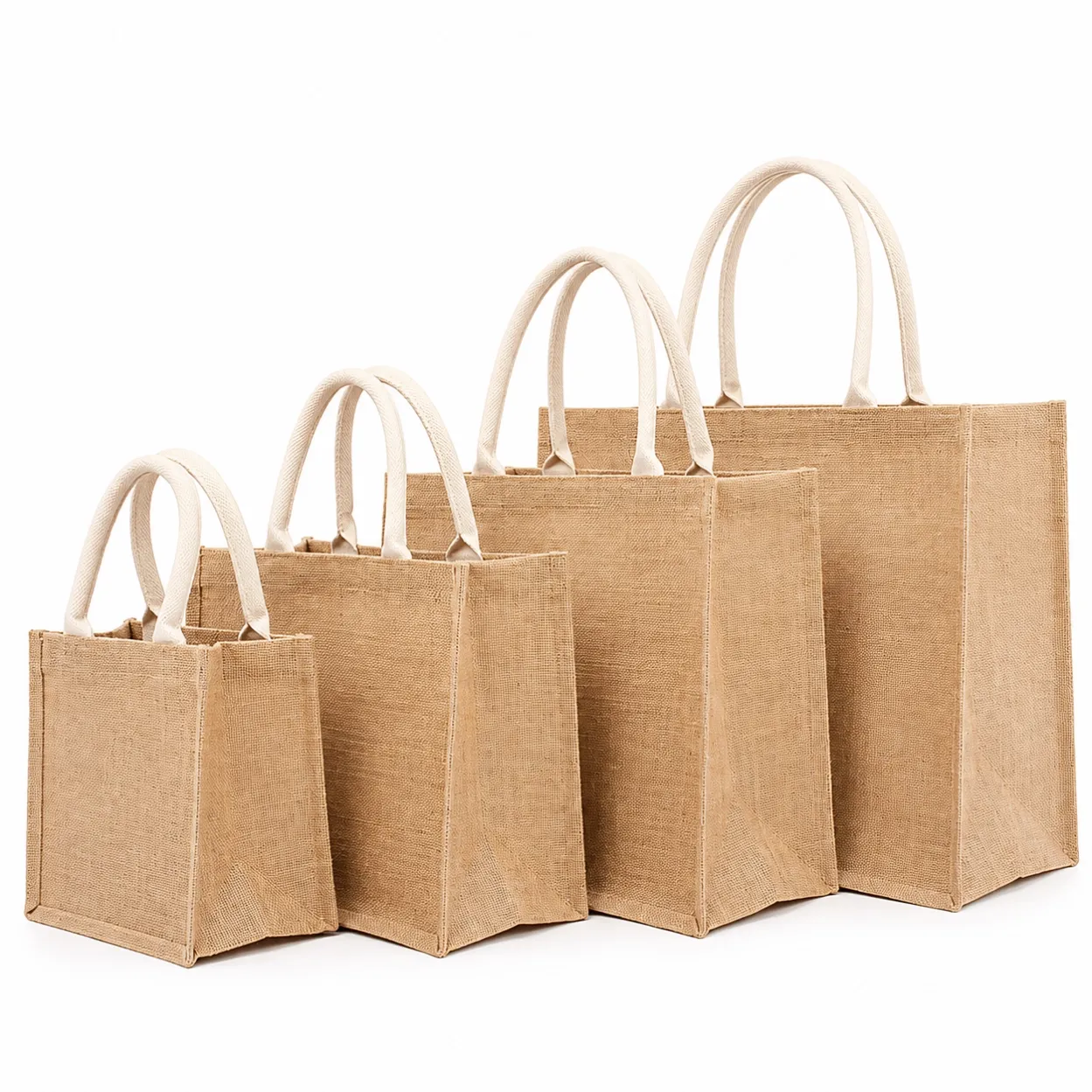
Four standard gusseted sizes cover most programs. The weight figures are per-unit net weight, which matters as much as the dimensions when you are calculating freight — jute is heavier than canvas at the same size, and the shipped volume is set by the flat-packed dimensions rather than the open size.
Size (W × H × D) | Unit Weight | Typical Use |
|---|---|---|
20 × 20 × 10 cm | ~130 g | Small jute bags for favours, jewellery and cosmetics packaging |
32 × 24 × 10 cm | ~180 g | Standard gift packaging, boutique retail, sample bags |
36 × 32 × 14 cm | ~250 g | Mid-size shopping tote, conference bags, merchandise retail |
45 × 35 × 16 cm | ~320 g | Large shopping tote, grocery use, sample and showroom bags |
Most programs order somewhere between a few hundred and several thousand units. At jute bags bulk volumes the two variables that move price most are the size mix and whether you standardise on one colourway — a single size in a single colour lands in the best tier, while a spread across four sizes and five colours costs more per unit because each combination needs its own cutting and printing run.
Dimensional tolerance runs to roughly ±1 cm on standard production. If your program has a hard size requirement — for example a bag that must fit a specific box — state the internal dimensions you need at the sampling stage rather than relying on the nominal size.
Colours and Finishes
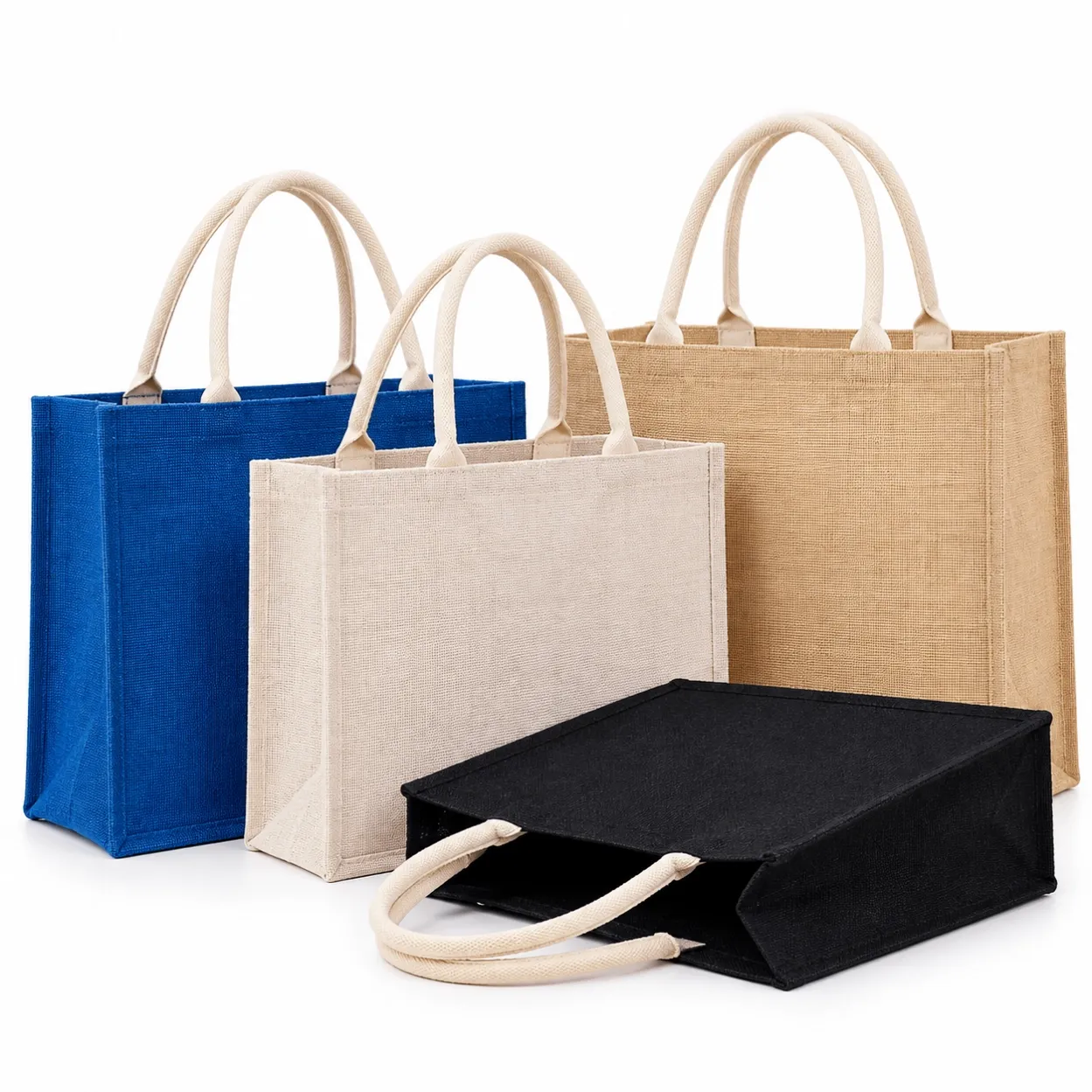
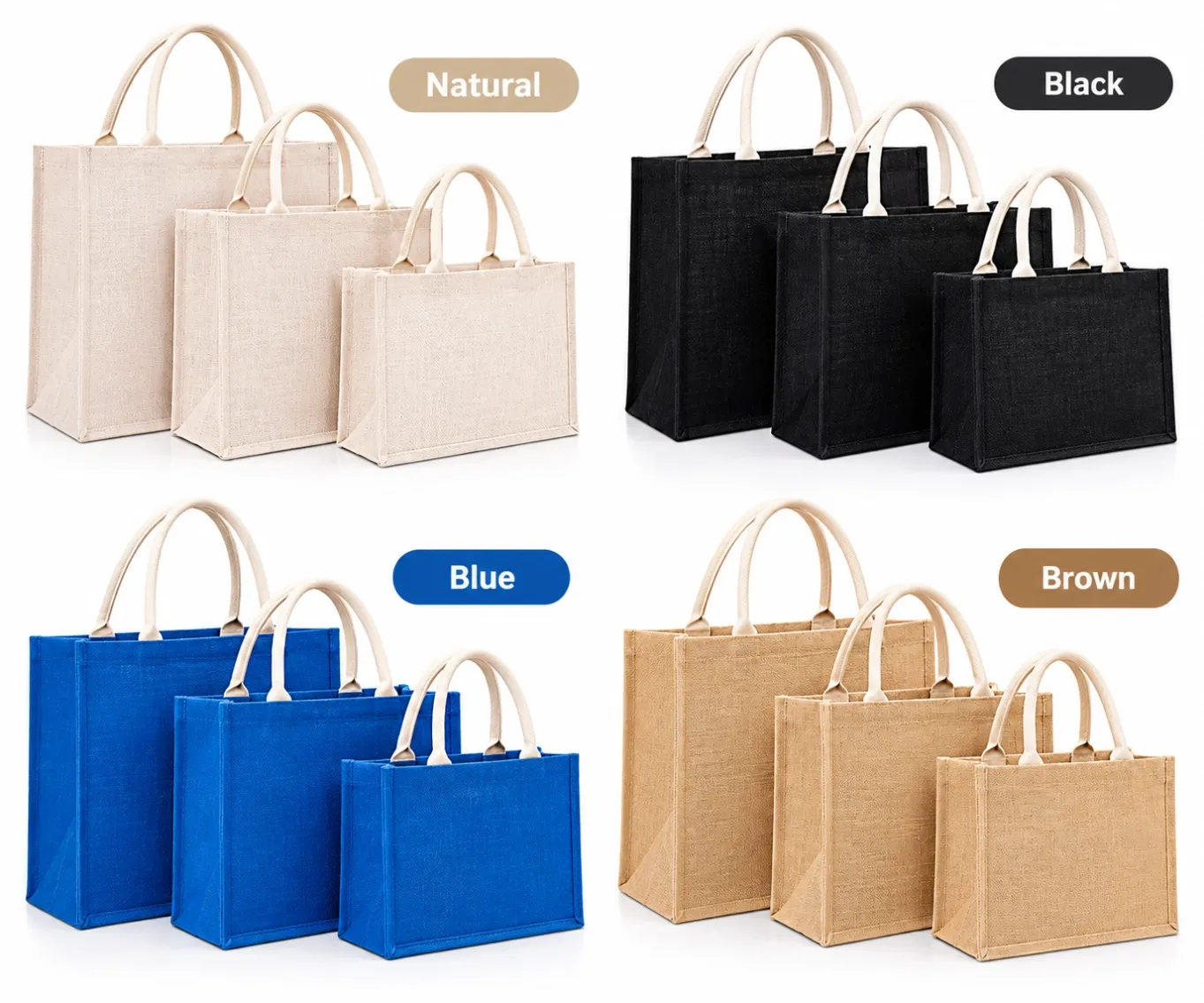
Five stock colourways cover most programs, and custom colour development is available on volume orders.
- Natural jute — the untreated tan of the fibre. The default choice, and the one that reads most clearly as an eco material.
- White — bleached or white-laminated, giving a cleaner retail look while keeping the woven texture.
- Black — a strong contrast for premium retail and night-market gift packaging; prints need a white underbase to stay bright.
- Blue — a mid-tone option for corporate programs wanting a brand-adjacent neutral.
- Dark green — the colour that most closely matches the organic and farm-shop category.
- Custom colour — dyed to a Pantone reference on volume orders, with a colour sample approved before production.
One production point that affects both cost and appearance: jute can be supplied laminated or unlaminated. Lamination adds a coating that stiffens the bag and improves print adhesion, but it costs hand feel and weakens the natural-material claim. For sustainability-positioned programs, specify unlaminated and accept the coarser finish.
Printing Methods
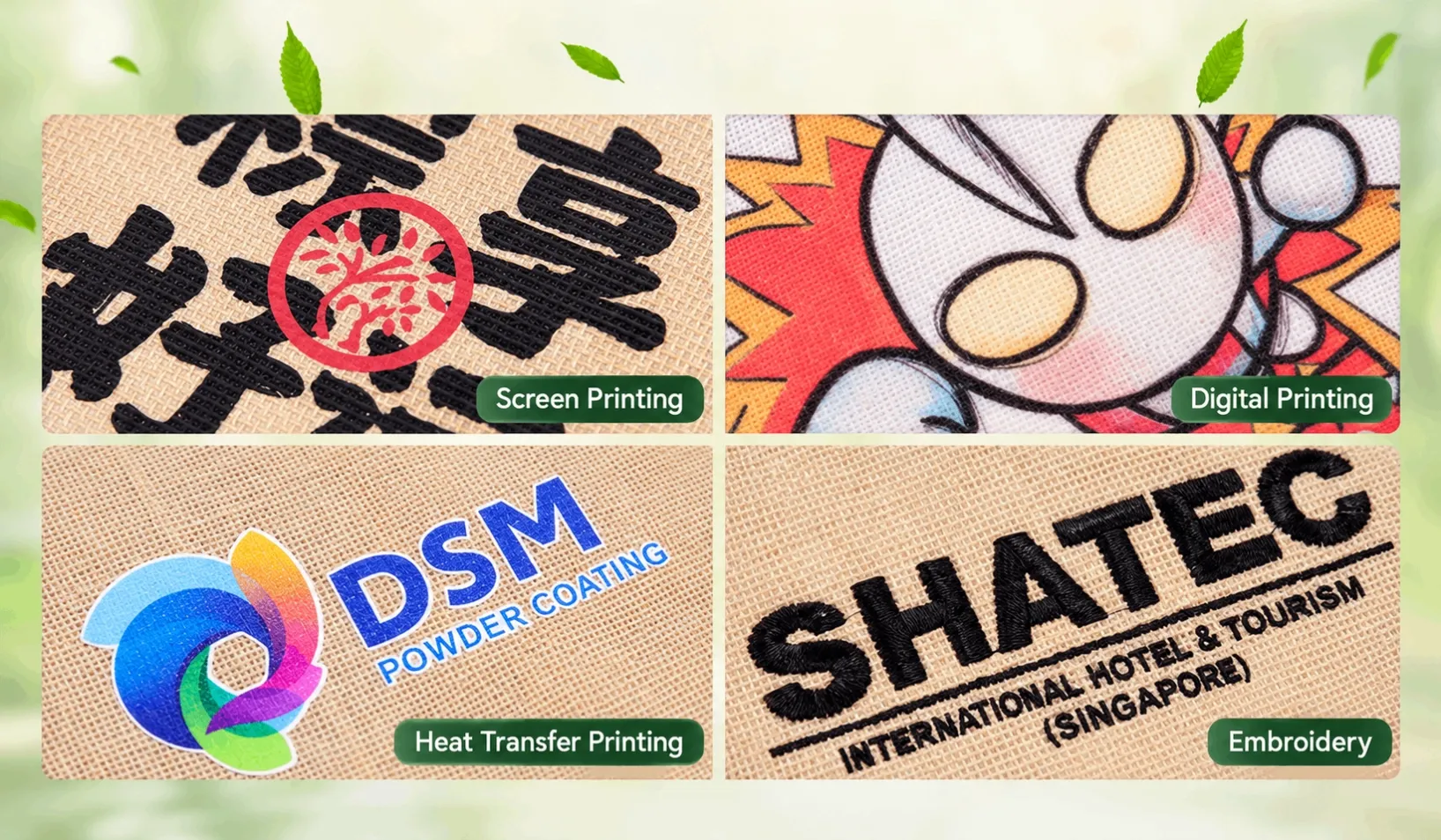
Method | Result on Jute | Best For | Notes |
|---|---|---|---|
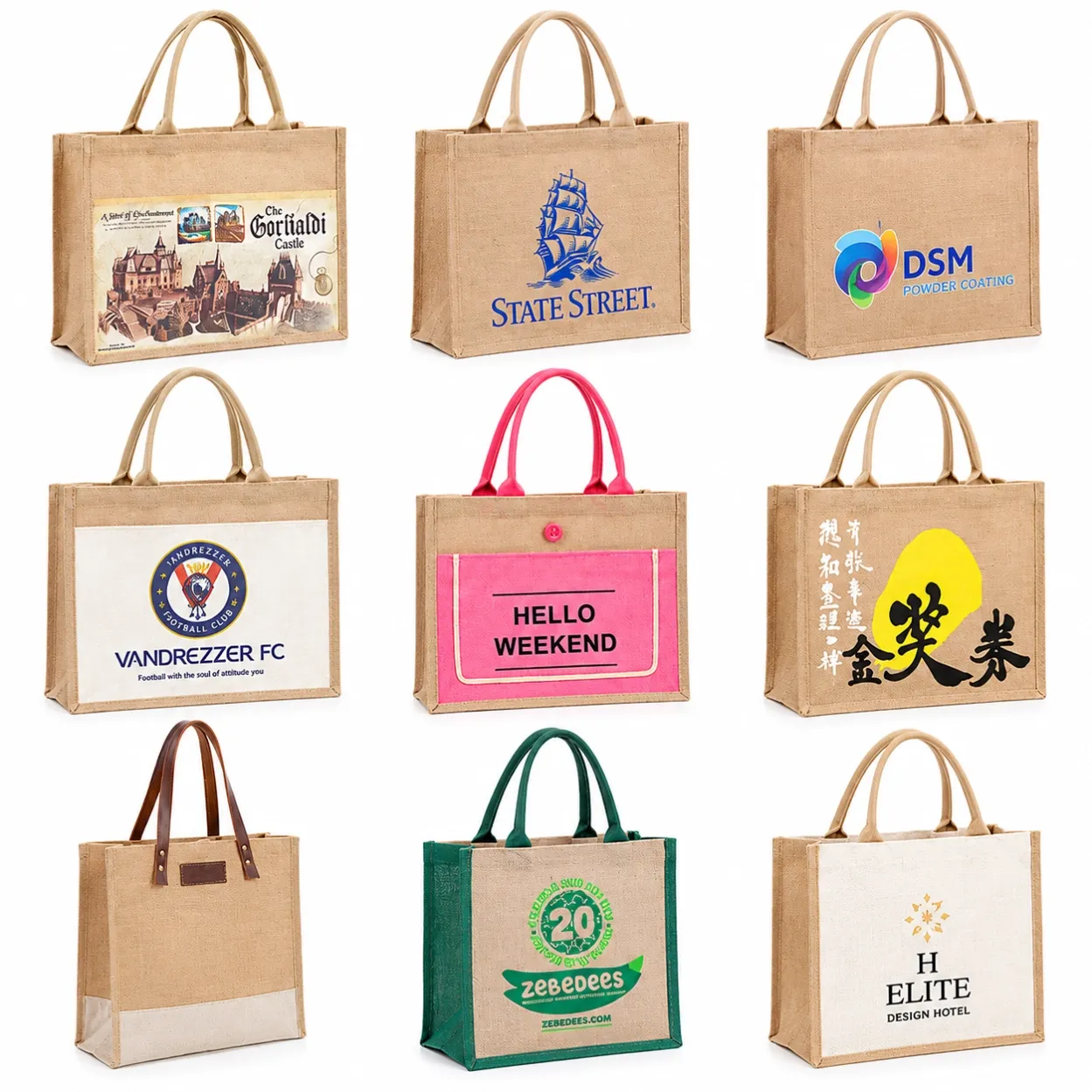
Screen printing | Bold, solid colour blocks | High volume, simple logos | One screen per colour; needs a white underbase on natural jute |
Heat transfer | Fine detail and gradients | Detailed artwork on smooth or laminated jute | Adhesion is weaker on coarse unlaminated weave |
Digital printing | Full-colour, photographic detail | Multicolour artwork, small runs | Higher per-unit cost at volume; no setup charge |
Embroidery | Stitched, textured mark | Premium feel, crafted look | Limited detail; slower and costlier at volume |
The single most important printing note for jute: a white underbase is normally required before colour printing, because the natural tan weave dulls ink applied directly. A quote for "full-colour printing on jute" that does not include an underbase pass is either planning to skip the step or has not costed it — either way the result will be duller than the mockup.
Construction Details
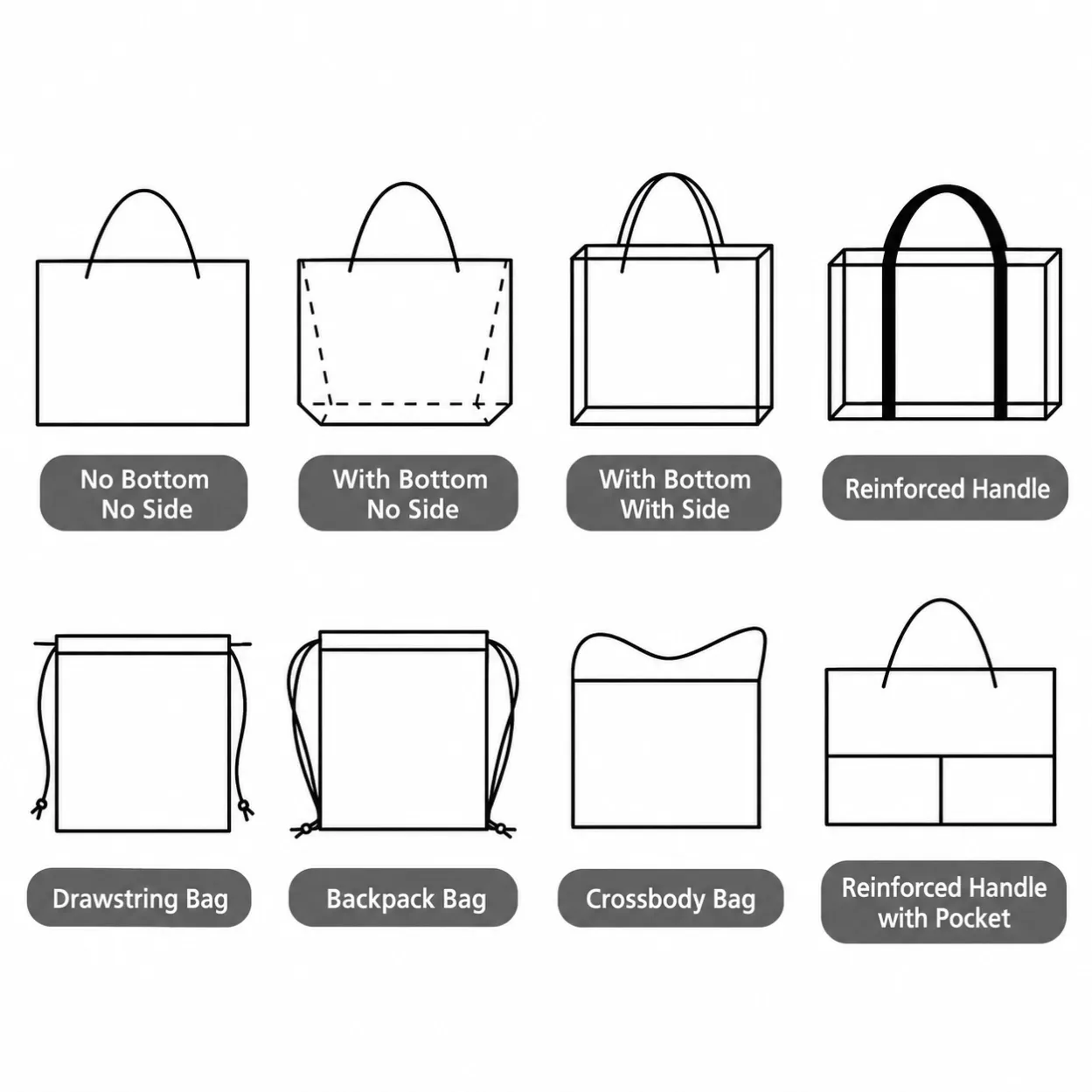
- Gusseted base and sides — the 10–16 cm depth is what lets the bag stand upright and hold a boxed product; a flat bag folds smaller but will not carry a real load.
- Handle attachment — stitched through the bag mouth on standard production. For load-bearing use, specify bar-tack reinforcement rather than surface-mounted handles.
- Handle length — sized to the carrying mode: short for hand carry, longer for shoulder carry.
- Bag mouth — hemmed and reinforced at the top edge, where handle load concentrates.
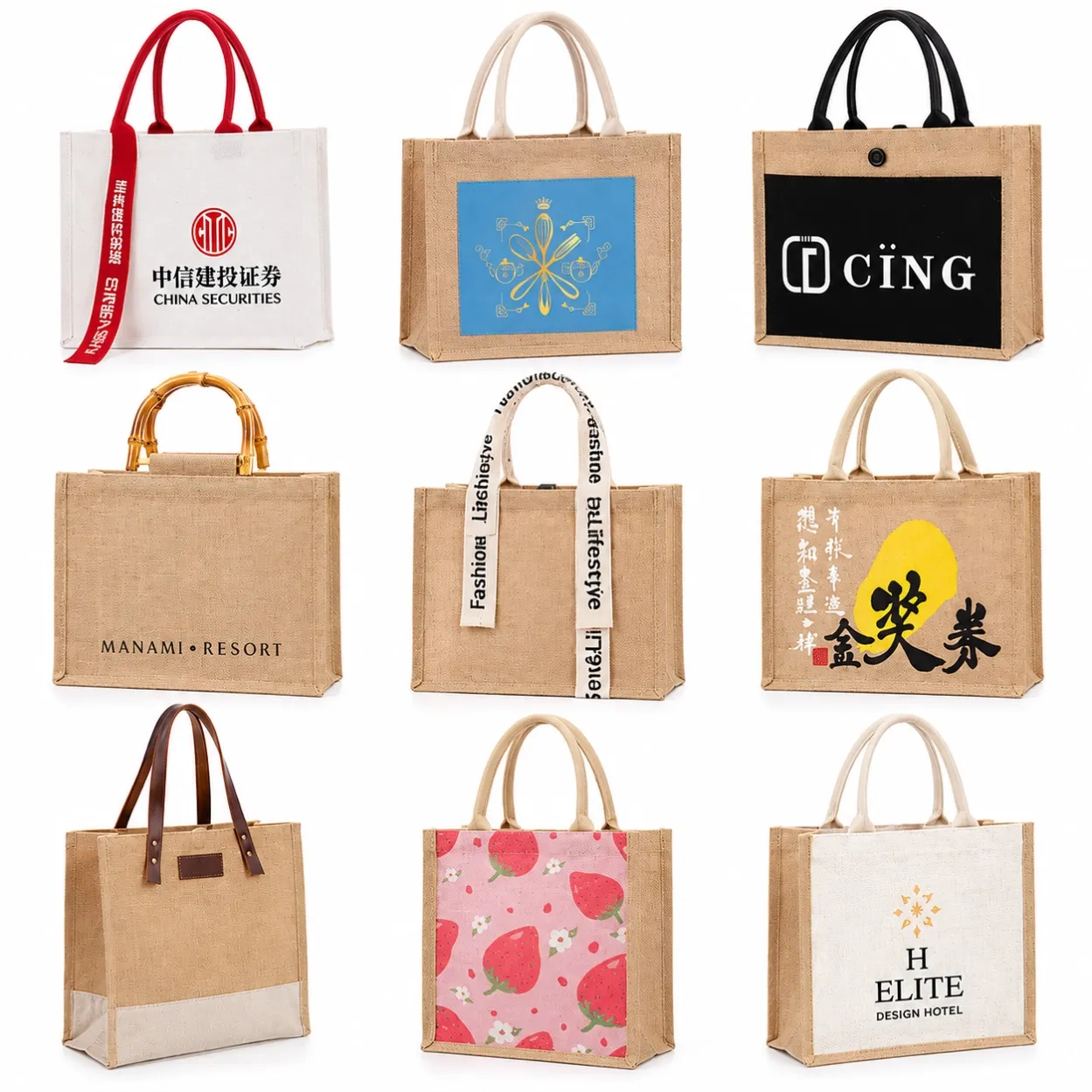
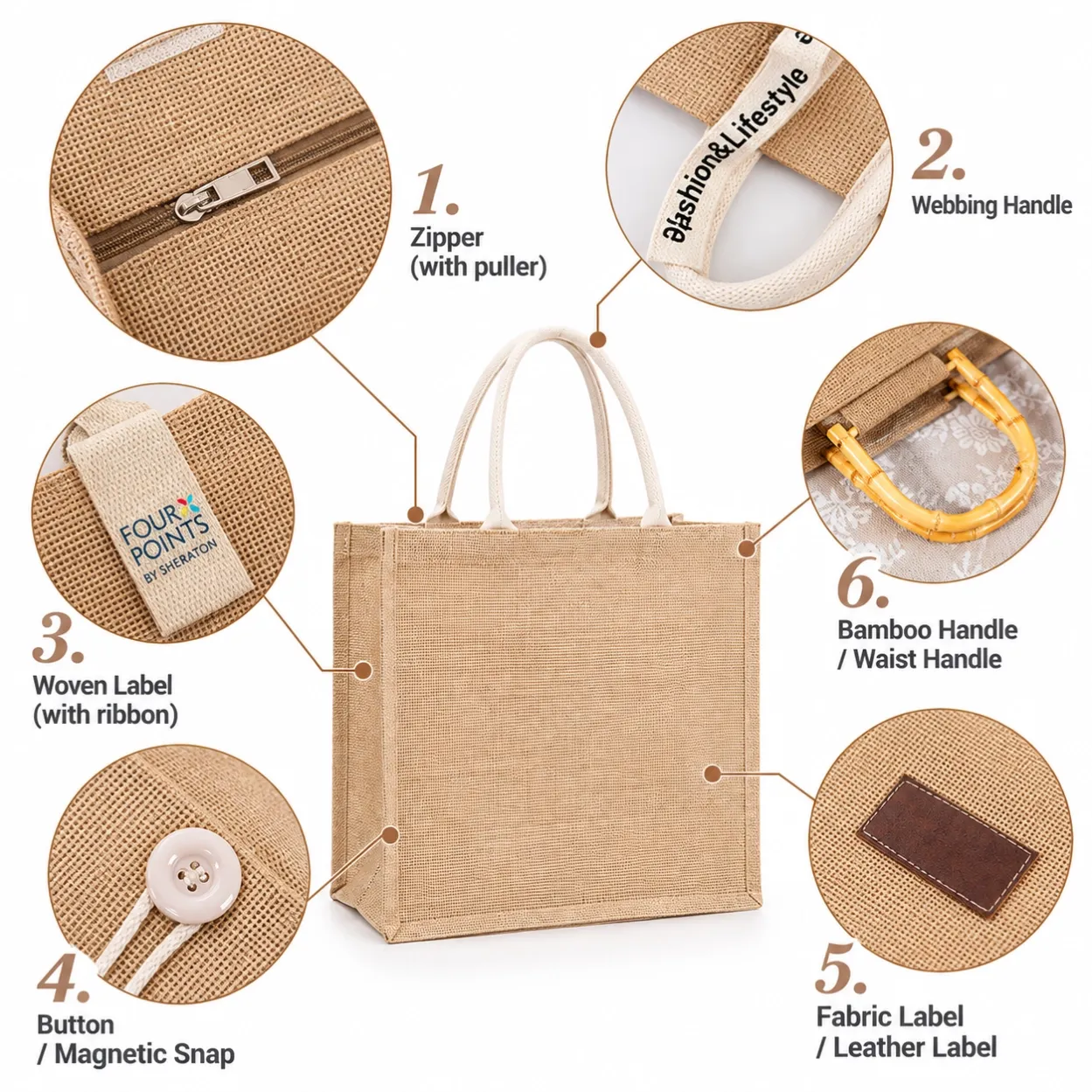
- Optional closures — drawstring, button or magnetic snap, zip top, depending on the model.
- Optional add-ons — printed or coloured webbing handles, fabric or leather label, interior pocket.
Applications and Use Scenarios
- Corporate gift packaging — the outer bag around a gift set, holiday hampers and client gifts
- Retail and boutique — shopping bags for apparel, cosmetics, homeware and farm-shop retail
- Organic and sustainable brands — the material statement matches the product positioning
- Trade shows and events — attendee bags that survive the show and get reused afterwards
- Hospitality — hotel gift bags, welcome amenities and turndown packaging
- Seasonal programs — Christmas gift sacks, Easter and Halloween packaging formats on the same production lines
Certifications and Material Claims
If the program makes an environmental claim, the documentation has to support it — an unverified claim on a promotional product is a compliance risk for the company distributing it, not for the factory.
- BSCI — Business Social Compliance Initiative audit covering labour and factory conditions
- Sedex / SMETA — ethical trade audit covering labour, health and safety, and environment
- GOTS — required for any organic cotton claim; a chain-of-custody certification, not a material statement
- GRS — required for any recycled fibre claim, also chain-of-custody
- ISO 9001 — quality management system
Jute itself is a natural bast fibre and does not require organic certification to be described as natural — but "biodegradable" and "compostable" are regulated terms in several markets, so confirm the exact wording your compliance team will accept before it goes on packaging.
How We Work With Manufacturing Partners
Every order runs through a manufacturing partner selected for the product category — a factory whose equipment, testing capability and certifications match the job, rather than a general line stretched to cover whatever comes in.
Textile bags look simple and are not. The process runs through fabric weaving, cutting, gusset stitching, handle attachment, hemming and printing — each step with its own failure mode. The partners we work with are specialists in woven bags, and each order is placed with the one whose equipment and printing capability match the specification.
Bulk Ordering and Volume Pricing
- One supplier across jute and canvas. Both materials plus printing and hardware usually come from a textile-bag specialist; sourcing them separately splits freight and the quality standard.
- Approve a loaded sample. Fill it with weight, lift it by the handles, inspect the gusset seam and handle attachment under load. Jute hides construction quality until it is carrying something.
- Plan freight by volume, not weight. Totes are bulky and a container fills by cubic volume long before it reaches a weight limit. Gusset depth and flat-packing both change shipped volume materially.
- Book production early for seasonal programs. Jute demand spikes ahead of the Christmas gift-packaging season; factories tighten capacity accordingly. Programs with fixed delivery dates should book four months out. For wholesale jute bags orders, the same applies to spring retail — capacity taken in January is the difference between shipping on time and waiting for a slot.
The same rules apply whether you are buying burlap bags bulk for a retail chain or a smaller branded program: one specification held constant, a loaded sample approved, and freight planned by volume.
Ordering Information
Item | Details |
|---|---|
Minimum order quantity | Every product is different, so MOQ depends on the size, colour and printing method. Tell us the quantity you need and we will do our best to make it work for your order. |
Branding options | Screen printing, heat transfer, digital printing, embroidery; white underbase where required |
Sample lead time | 5–10 days for stock sizes and colours; longer for custom colours or new specifications |
Production lead time | 20–30 days after sample approval |
Packaging | Bulk carton as standard; individual poly bag or printed sleeve available |
Shipping | Air or sea freight; sea freight is materially cheaper at volume because totes ship by cubic volume
Tell us your target quantity, sizes and deadline. We will check what is possible for your order and come back with unit price and lead time. |
Frequently Asked Questions
What is a jute bag made of?
A jute bag is woven from bast fibre extracted from the jute plant, a fast-growing crop that needs little pesticide and produces a strong, coarse yarn. The fibre is spun and woven into fabric, then cut and stitched into bags. The natural colour is tan, which is why untreated jute bags all look similar unless they are dyed or printed. Jute is biodegradable and recyclable, which is why it dominates gift packaging where the bag is meant to be disposed of without environmental cost.
Are jute bags stronger than canvas bags?
At the same size, a jute bag is generally heavier and stiffer, and holds a boxed shape better than canvas. Canvas is lighter and smoother, and takes detailed printing more cleanly. For carrying heavy or boxed products, jute has the structural advantage; for detailed multicolour artwork, canvas reproduces it better. Many programs use both — jute for the outer packaging and canvas for the bag itself.
What sizes do jute tote bags come in?
The standard gusseted range runs 20 × 20 × 10 cm, 32 × 24 × 10 cm, 36 × 32 × 14 cm and 45 × 35 × 16 cm, with unit weights from about 130 g to 320 g. Size tolerance is roughly ±1 cm on standard production. If the bag must fit a specific box, specify the internal dimensions you need at sampling rather than relying on the nominal external size.
Can jute bags be printed in full colour?
Yes, by digital printing or heat transfer, but the weave limits the result. Fine detail and gradients reproduce less cleanly on jute than on canvas, so bold graphics work best. Colour printing on natural jute usually needs a white underbase passed first, otherwise the tan weave dulls the ink. Laminated jute takes print more cleanly than unlaminated, at the cost of hand feel and natural appearance.
What colours are available?
Stock colours are natural jute, white, black, blue and dark green, with custom Pantone-matched colours available on volume orders. Natural jute is the default and the option that reads most clearly as a natural material. For programs on a tight timeline, stock colours ship significantly faster than custom dye lots.
How durable are jute bags for reuse?
Well-constructed jute bags hold up to years of regular reuse, which is the point of specifying them for retail and event programs. Durability comes down to construction rather than the fibre: a gusseted base, hemmed and reinforced bag mouth, and handles stitched through the bag mouth rather than surface-mounted. Inspect these three points on a loaded sample before committing to volume.
What certifications should a jute bag supplier provide?
For social compliance, BSCI and Sedex/SMETA audits cover labour and factory conditions. For material claims, GOTS is required for organic cotton and GRS for recycled fibre — both are chain-of-custody certifications, so they must cover the specific product rather than the factory's general capability. ISO 9001 covers the quality management system. Ask for the certificate matching the claim you intend to make.
Get a Quote for Custom Jute Bags
Send us the size, colour, printing method, quantity and destination market. We will confirm the specifications that fit, quote at your volume, and give you a sampling and production timeline you can plan around. You can also read our custom tote bags buying guide for the wider material and construction comparison, or browse our product categories.
More Models in This Range
The sizes and constructions described here cover what most programs need, but our jute and fabric bag range runs considerably wider — additional sizes, drawstring and backpack formats, zip-top pouches, printed webbing and bamboo handles, and seasonal gift-sack formats. If you need a specification that is not described here, ask us for the complete jute bag catalogue: we will send the full model list with dimensions, unit weights, colour options and printing recommendations so you can match the specification to your program.