
Oct 8, 2026Customization
Custom Corporate Gifts: From Product Idea to Bulk Production
How custom corporate gift projects move from idea to bulk production — customization levels, prototyping and sampling, bulk production stages, and the timeline and cost factors that shape the project.
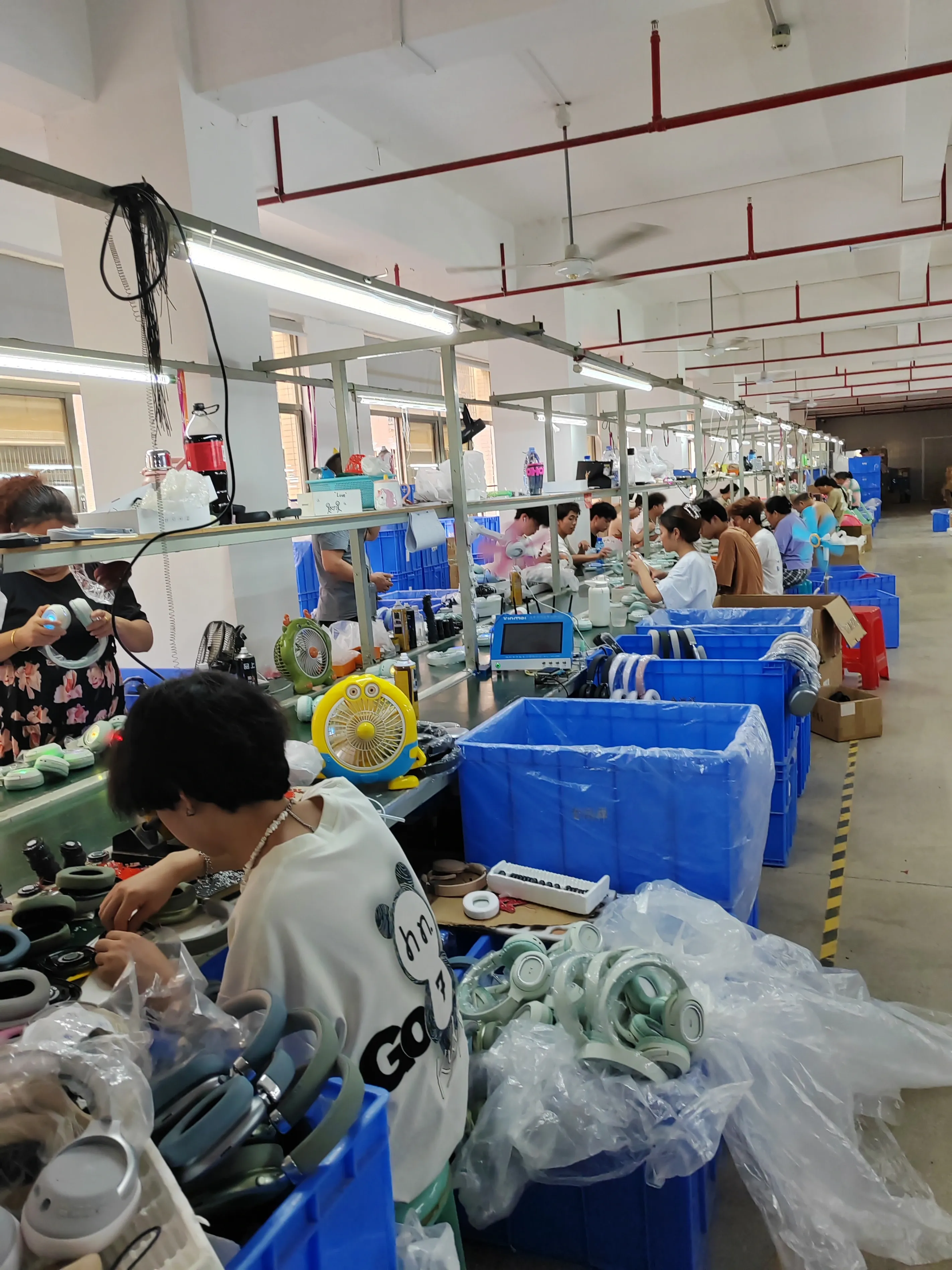
Most companies start a custom corporate gift project the same way: someone finds a product they like — a tumbler, a backpack, a desk organizer — and asks, "can we put our logo on this, and make it feel like ours?"
The answer is almost always yes. But how you get there changes everything about the cost, the timeline and the risk. A logo added to an existing product is a two-week project. A product modified to match your brand's color and material is a six-week project. A product designed from scratch is a three-to-five month project with tooling investment.
This guide walks through the full path of a custom corporate gift project, from the initial idea to receiving bulk production — so you can choose the right level of customization for your budget and deadline, and know what happens at each stage.
What "Custom Corporate Gifts" Actually Means
"Custom" is used loosely in this industry, which creates confusion from the first conversation with a supplier. In practice, custom corporate gifts fall into four levels, each with a different cost structure and timeline:
Level | What You Get | Typical Timeline | Investment |
|---|---|---|---|
1. Logo customization | An existing product with your logo added — printed, engraved or embossed | 2–4 weeks | Lowest; setup fee per method |
2. Logo + packaging | Standard product with branded box, sleeve, bag or label | 3–6 weeks | Low to moderate; packaging MOQ applies |
3. Modified product | Product color, material, size or component changed to match your brand | 6–10 weeks | Moderate; may require sampling at cost |
4. Fully custom product | New design with custom mold, structure or electronics specification | 3–5 months+ | Highest; tooling/mold cost plus higher MOQ |
Key insight: most companies need level 1 or 2, and often assume they need level 4. If your goal is "a gift our clients recognize as ours," logo plus packaging usually delivers it. Level 3 and 4 make sense when the gift represents a signature product line, when you need a specific material for your brand story, or when no existing product comes close to what you want.
If your project includes more than one product — for example a gift set combining drinkware, a notebook and packaging — the coordination between suppliers becomes a project of its own. Our guide to sourcing multiple corporate gift products covers how to manage MOQ, samples and timelines across products.
Deciding your level before contacting suppliers saves weeks. It determines which factories can respond, what questions to ask, and how to compare quotes that otherwise look like they are for the same thing but are not.
Step 1: Define the Product Idea
A product idea becomes workable when it answers four questions:
- What is the product category? Drinkware, bags, stationery, technology, home or travel. The category determines the manufacturing base and the customization methods available.
- Who receives it, and what should they feel? A premium, long-lasting gift for executives is a different product decision than a practical everyday item for employees.
- What must be branded? The product itself, the packaging, or both. "Both" is common for corporate gifts and should be stated from the start.
- What quantity, and what budget per unit? Both numbers shape which level of customization is realistic. A $5 target unit price rules out level 4; a $50 target may make it possible.
Write these four answers down. Every later decision — factory selection, sampling, quote comparison — is checked against them, and a written brief is what lets a supplier give you an accurate answer instead of a guess.
Where Product Ideas Come From
Most successful corporate gift products are not invented from nothing — they are existing products adapted to a specific audience. Useful starting points:
- What your people actually use daily. The gifts that stay visible are the ones that get used: bottles, notebooks, bags, cables, desk items.
- What competitors give. Not to copy, but to see the category standard for your industry, then differentiate on customization or quality level.
- What your industry's work involves. A construction supplier giving a durable work bag, or a software company giving a cable organizer, reads as thoughtful; a generic pen set reads as filler.
- Supplier catalogs. Browsing existing product catalogs from sourcing partners is the fastest way to see what is manufacturable at your budget, and it often surfaces a product you had not considered.
For category overviews that explain what each product type can do and its typical constraints, see our guide to custom promotional products from China.
Step 2: Product Development — Choosing the Right Path
With the idea defined, the next step is deciding how far you are willing to deviate from an existing product. Each path has a different development process:
Path A: Adapt an Existing Product
The factory makes the product already; your change is the logo, the packaging, or a small modification like a different color trim. Development work is minimal — mostly artwork and one sample. This is the fastest and lowest-risk path, and it covers the large majority of corporate gift projects. Most products you see in supplier catalogs can be sampled within one to two weeks.
Path B: Modify an Existing Product
The product structure stays, but a component changes: a different lid, an inserted power bank, a changed fabric, a custom color that requires a dedicated production run or material order. This path usually requires:
- A technical discussion with the factory about what can change and what cannot
- Confirmation of whether the change requires new tooling (some components do, most do not)
- A sample of the modified version before bulk production
- A higher MOQ than the standard version, because a modified component often has its own minimum production quantity
Timeline for Path B is typically six to ten weeks including sampling. The main risk is a change that looks small — a different surface finish, a different material thickness — but forces the factory to re-tool or re-source materials. Ask explicitly which changes require new tooling before you commit to the design.
Path C: Fully Custom Product
The product is designed from scratch: new structure, new mold, or new specifications. This path involves the full development cycle:
- Design briefing and technical drawing (you provide the concept, the factory provides feasibility feedback)
- Mold/tooling quote and confirmation — a one-time cost, typically charged up front
- Prototype or first article for fit, function and appearance review
- Revisions if needed (each revision may have a cost and adds a week or two)
- Pre-production sample approval, then bulk production
Tooling cost varies enormously by product type — from a few hundred dollars for a simple mold to tens of thousands for complex products — and tooling lead time alone is often three to five weeks before any product is made. Fully custom makes sense when the product needs to be genuinely proprietary, or when it will be used beyond a single gift project. It rarely makes sense for a one-time 1,000-piece gift order with a two-month deadline.
Step 3: Prototyping and Sampling
Whatever path you take, the sample is the pivot point of the whole project: it is where the product stops being an idea and becomes a tangible specification that production must match.
What happens during sampling:
- Artwork and mockup stage. You provide the logo file and design intent; the factory returns a digital mockup showing placement, size and method. This confirms direction — it is not yet a production standard.
- First sample. The factory produces the physical sample, usually in the next one to two weeks for standard products. You check function, materials, logo quality and packaging.
- Revision round (if needed). Changes to logo size, color tone, material or packaging are made and a revised sample produced. Each round typically adds one to two weeks.
- Approval. You approve the sample in writing, describing the exact approved version: product, color, logo artwork and method, packaging. This approval becomes the production standard and the reference for quality control.
Three things to check carefully in a sample before approving:
- The logo at real viewing distance. Hold the product at arm's length, not against your face. A logo that looks precise in close-up may be illegible in real use.
- Color against your brand reference. Compare the sample's logo color against your Pantone or brand reference under natural light. Production color can shift slightly from sample; agreeing on the tolerance now prevents a dispute later.
- Function after branding. Check that the customization did not affect how the product works — a laser-engraved tumbler should still hold its temperature; a printed bag should still fold normally.
If the sample needs revision, be specific: "logo 15% larger and moved 5mm down," not "make it look better." The sample approval conversation also decides the quality standard for the entire production run, and getting precise here is cheaper than arguing about the bulk order later. For a full checklist of what to verify on a sample, see our guide to corporate gift sourcing.
Step 4: From Sample Approval to Bulk Production
Once the sample is approved, the project shifts from design to manufacturing. This stage has its own sequence:
- Order confirmation and deposit. You confirm quantity, unit price and delivery terms; production typically starts after a deposit (commonly 30–50%, with the balance before shipment). Confirm what the deposit percentage is and when the balance is due.
- Material procurement. The factory orders the materials for your specification — custom colors, printed packaging or specialty components may add time here before production even starts.
- Production. Manufacturing runs typically take one to three weeks for standard products, longer for complex or multi-component goods.
- In-process and final inspection. Quality checks during production catch problems early; a final inspection before packing verifies the finished goods against the approved sample.
- Packing and shipping. Goods are packed per the agreed specification and shipped — by air for speed or sea for cost, with the tradeoff explained below.
The most common production surprise is not a functional defect but a variation: a product that matches the sample in every way except a slightly different color tone, because the production material batch differs from the sample batch. The defence is the tolerance agreement made at sample approval — a defined Pantone reference for logo color, and an agreed acceptable range for material color.
Timeline and Cost: What Drives Both
Custom corporate gift projects are shaped by a small number of levers. Understanding them lets you plan realistically instead of hoping.
Factor | Effect on Timeline | Effect on Cost |
|---|---|---|
Customization level (logo → custom product) | 2 weeks → several months | Setup fee → tooling investment |
Quantity | Minor for standard products; bigger for custom | Higher quantity usually lowers unit price tier |
Custom packaging | Adds 1–3 weeks | Second purchase with its own MOQ |
New tooling or mold | Adds 3–5+ weeks before production | One-time cost, sometimes significant |
Shipping method | Air: days. Sea: weeks | Air: higher. Sea: lower per unit |
Season and holidays | Chinese New Year and Q4 add 1–3 weeks | Rush production may add cost |
A practical rule for planning: 3–4 months from idea to delivered bulk order for a level 2–3 project, and plan backward from your deadline with a two-week buffer. For projects with fixed event dates, remember that the deadline people miss is not the production deadline — it is the shipping one, because sea freight is attractive on cost and painful on predictability.
On cost, the most common planning error is budgeting only for the product. A complete project budget includes the products, customization setup and unit costs, packaging, samples, tooling (if any), inspection and shipping. Buyers who split the budget across all these categories before selecting products avoid the situation where the products are perfect and the project is over budget.
Common Mistakes in Custom Gift Development
Choosing the customization level after falling in love with a design. The design determines the level; a fully custom design needs tooling budget and months, not weeks. Agree the level first, then design within it.
Skipping the written brief. Without a defined product, audience and budget, no supplier can quote accurately, and you collect quotes that cannot be compared.
Treating the digital mockup as the commitment. Mockups are for direction. The physical sample is the commitment, and production matches the sample — so never approve a sample casually for speed.
Underestimating packaging. Custom packaging is a separate production item with its own MOQ and timeline; it is the most frequent cause of budget and schedule overruns in gift projects.
Forgetting certification for regulated products. Electronics and items intended for children may need certification for your destination market. Confirm at the quoting stage, not at shipping.
Frequently Asked Questions
How long does it take to produce custom corporate gifts?
For a standard product with logo or logo-plus-packaging customization, plan 4–8 weeks from order to delivery depending on shipping method. Add sampling time (2–4 weeks) if you have not settled the design. For modified or fully custom products, plan 2–5 months including tooling.
What is the minimum order quantity for custom corporate gifts?
MOQ depends on the product and the customization: a standard product with logo printing often starts at a few hundred pieces, while a fully custom molded product can require one to several thousand. Custom packaging usually carries its own, higher MOQ. The practical approach is to confirm product and packaging MOQ together at the quoting stage.
Can I get one sample before ordering in bulk?
Yes, and you should. Sampling is standard practice: the factory produces a physical sample for your review, usually within one to two weeks for standard products. Samples are typically charged, and the fee is often credited against the bulk order if it proceeds.
Does a custom logo cost extra?
Expect a one-time setup fee per customization method (screen, plate, mold or digitizing fee) plus a small per-unit customization cost included in the unit price. The setup fee is charged once regardless of quantity, which is why unit prices drop at higher quantities.
What if the bulk order does not match the sample?
This is why sample approval is documented in writing: the approved sample and its specification define what production must match. If goods deviate from the approved standard, a pre-shipment inspection gives you evidence to require rework or a remedy before the balance payment. This protection depends on having a written standard — so never approve a sample with just "looks good."
Next Step
Custom corporate gift development follows a predictable path: define the idea, choose the customization level, sample and approve, then produce against that approved standard.
Whether you have a finished design or just a product category and a budget, the practical first step is a project review. Browse our custom corporate gift products by category, or send us your project idea and requirements — we will confirm the feasible customization level, flag the MOQ and tooling implications, and map out a timeline to your deadline.