
Oct 22, 2026Gift Ideas
Employee Birthday Gifts: A Company Program Guide
How to run an employee birthday gift program sourced from China — standard gifts or choice sets, monthly batch process, hybrid delivery, budget and tax basics.
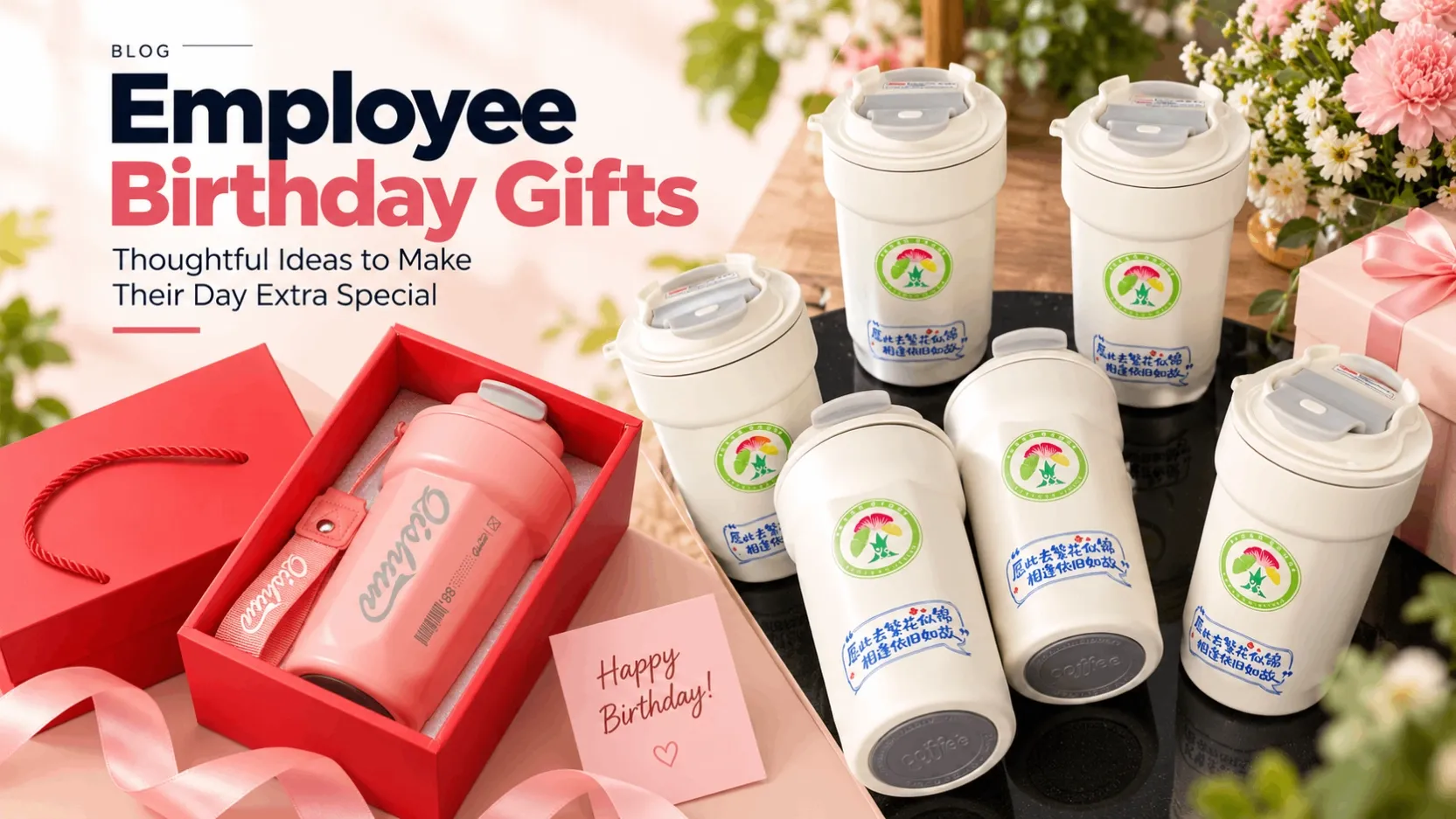
Employee birthday gifts are the highest-frequency recognition moment most companies have: twelve dates a year times every employee on the roster. That frequency is exactly why birthdays need a program rather than good intentions — ad-hoc birthday buying is where budget leaks, quality drifts and someone gets forgotten.
The short answer: run birthdays as a standing program with one standard gift (or a small choice set) purchased in quarterly or annual batches, triggered by a monthly birthday list rather than individual requests, with a simple personal touch — a name, a card — added at hand-over. For distributed teams, direct-to-home shipping is the reliable pattern. For companies sourcing from China, the same volume planning as any employee gifting program applies — and the frequency makes birthday programs one of the easiest to consolidate.
This guide covers how to build the program, the gift types that work, batch purchasing and delivery mechanics, budget structure, and how birthdays fit alongside your other employee gifting.
Why Do Birthdays Need a Program, Not Ad-Hoc Buying?
The birthday moment is structurally different from other occasions, and four properties push it away from ad-hoc purchasing:
- It repeats every month. Unlike holiday gifting (one date, one order), birthdays arrive continuously. A program runs on a monthly list; ad-hoc buying runs on reminders that fail.
- It is personal and comparative. Everyone knows when colleagues get birthday gifts, and everyone knows what they got. A standard, consistent gift reads as fair; unpredictable timing and quality reads as favoritism.
- The volume is knowable. Headcount tells you roughly how many birthdays to plan for a year — this is one of the most plannable gifting categories in the HR calendar.
- Misses are visible. A missed birthday is a conspicuous failure; a well-run program (a gift arriving on or before the day) builds trust in HR operations generally.
The answer to all four is the same: a defined program with a stocked catalog, a monthly trigger, and a delivery path that works for every employee's location — the same discipline covered in our employee appreciation program guide.
What Gifts Work for Employee Birthdays?
Birthday gifts sit between recognition items (which must feel earned) and generic swag (which feels impersonal). The categories that work share a trait: they are personal-use items that feel chosen for a person:
Category | Examples | Why It Works |
|---|---|---|
Premium drinkware | Insulated tumblers, quality bottles, travel mugs | Personal use, daily visibility, reliable reorder path — the safest program staple |
Desk & wellbeing items | Desk plants, organizers, quality blankets, aromatherapy | Feels personal; strong for hybrid teams where desk items live at home |
Consumables with quality | Coffee, tea sets, gourmet snacks, snack boxes | Zero clutter, easy to share; works across cultures more easily than many items |
Choice-set items | Two or three options at similar value; recipient picks | The birthday is personal — a small choice compensates for the standardization |
What About Gift Cards for Birthdays?
Gift cards solve logistics (no shipping, no sizing, instant delivery) but cost the brand moment: the birthday gift becomes a transaction. The practical split most companies use: gift cards where logistics dominate (remote employees, international teams, high-turnover roles), physical gifts where the program's purpose is a visible culture moment. Our comparison of gift cards and physical gifts covers the full trade-off — including tax treatment, which differs between the two forms in many jurisdictions.
How Do You Run the Monthly Program?
The operational backbone of a birthday program is a monthly list and a standing stock — not a per-person order. The working model:
- The monthly birthday list. HR pulls the month's birthdays from the HR system on the 1st. For each person: name, location, delivery preference (office hand-over or home address).
- A standing stock or a monthly production batch. Order birthday gifts in quarterly batches at volume (or maintain a stocked buffer) rather than a special order each month. The catalog is standardized; only names and delivery addresses change.
- Personalization batch. Where the gift takes a name (engraved tumbler, printed notebook), the supplier runs a personalization batch per list — the same workflow as recognition programs.
- Delivery, split by location. Office employees: a batch delivery to the office for the month's birthdays, handed over by managers or HR. Remote employees: individual parcels to home addresses, shipped on a schedule that lands on or before the birthday.
- The day-of element. The gift is the artifact; the moment is the acknowledgment — a card in the parcel, a team mention, a lunch. The program should define the small ritual, not just the item.
Monthly batches: birthday gifts are packed and personalized in runs, then distributed by office or shipped to home addresses.
How Should You Budget a Birthday Program?
Birthday budgets are per-employee-per-year, and the frequency of the moment changes the math: a birthday program at a modest per-person amount touches every employee every year, which makes it high-visibility spend relative to a holiday gift for the same money.
- Per-employee annual line. Headcount × per-birthday budget = the program number. It is a small line in the gifting calendar and one of the easiest to approve, because the audience is known and the schedule is fixed.
- Keep tiers flat. Birthday gifts are equal across the company — this is not a recognition program where tiers signal achievement. Same gift or same choice set for everyone.
- Count delivery in the unit budget. For hybrid teams, home delivery is a real per-parcel cost. A program that ignores it will overrun the moment the first remote hire joins.
- Follow tax thresholds per market. Many jurisdictions treat employer birthday gifts as taxable compensation above modest thresholds (the UK trivial-benefit exemption, Germany's €50 threshold, and the US de minimis rules all recur). Set the per-gift value with your finance team so the gift never creates a surprise for the recipient — the details sit in our appreciation guide.
What Are Common Birthday Program Mistakes?
Five mistakes that reliably undermine the program:
- Forgetting someone. The list fails when birthdays are tracked informally. The monthly HR pull is the entire fix — run the list, not memory.
- Late delivery. A birthday gift that arrives the following week reads as an operational apology. Size the buffer so parcels land on or before the date; for home delivery, ship a week ahead.
- Varying quality without reason. Different gifts for different employees by accident (or by supply constraints) creates comparison problems. One catalog, one standard, documented.
- Making the gift a burden. Oversized, cluttered, or high-maintenance gifts (items needing storage, upkeep or delicate handling) turn a thank-you into a chore. Personal-use, zero-maintenance items win.
- No remote path. Programs that only reach the office quietly exclude remote employees — the exact group that values visible inclusion most. Design home delivery in from the start.
How Do You Source a Birthday Program from China?
The sourcing model is the same as any employee gifting program, with the frequency adding one emphasis: the catalog must reorder reliably, because the program never stops running.
- One catalog, stock items, confirmed reorders. Choose products that the factory produces continuously and that accept fast personalization. Confirm reorder lead time, minimum quantity, setup reuse and price validity on the first order — the same discipline as our MOQ guide.
- Annual planning, quarterly batches. Place the year's volume forecast once; schedule production and personalization in quarterly batches as the birthday list rolls. This keeps unit costs at the volume tier while keeping deliveries current.
- Personalization workflow. Agree how name lists reach the supplier (secure transfer, defined format, per-batch deadline) and how completed gifts return (bulk to the office, individual parcels to homes).
- Packaging for two paths. Office hand-over can be simple; home delivery needs transit-grade parcels. Specify both in the brief if the team is hybrid.
For the quote, send the forecast (headcount and birthday count for the year), the catalog direction, the personalization scope and the delivery split (office vs home). You can also browse our product categories to shortlist the catalog, and the corporate gift sourcing service for the full process.
Frequently Asked Questions
What is a good birthday gift for an employee?
Personal-use items that feel chosen rather than distributed: quality drinkware, a desk or wellbeing piece, or a quality consumable — with the recipient's name or a specific card as the personal touch. For a program, the reliable structure is one standard item (or a small choice set) applied consistently, because consistency is what makes the program read as fair. Expensive one-off items are unnecessary: the birthday moment rewards reliability more than price.
Should companies give birthday gifts to employees?
Many do — it is the most frequent recognition moment available, and a well-run program builds a visible culture of acknowledgment at modest cost per person. The argument against is consistency risk: a program that forgets people does more damage than no program. Companies that can commit to the monthly process (a list, a stock, a delivery path) get a meaningful culture return for a small budget line.
Do employees prefer gift cards or gifts for birthdays?
Preferences split on context: recipients value choice (which gift cards give) but remember a physical gift received on the day. The practical approach used by most programs is a hybrid — physical gifts for office and milestone moments where the cultural signal matters, gift cards as the option for remote employees or hard-to-serve locations. Our gift cards vs physical gifts comparison covers the trade-offs, including the tax treatment differences.
How much should companies spend on employee birthday gifts?
Programs typically run at a modest per-person amount — birthday gifting is about the moment, not the value — set below the market's gift-tax threshold so the gift doesn't create a taxable event. The annual line is headcount × the per-person number, plus a delivery allowance for remote employees. Confirm the tax treatment per market with finance before setting the number.
How do you handle birthdays for remote employees?
Ship individual parcels to home addresses on a schedule that lands on or before the birthday — one week ahead is the practical rule. Keep an address-collection step in onboarding so the program always has current addresses, and use transit-grade packaging. For hard-to-reach locations, a digital gift card is the fallback that still marks the day. The same remote-distribution mechanics are covered in our employee experience guides.
Next Step
A birthday program comes down to four decisions: a standard gift or small choice set for everyone, a monthly list-and-batch process run from HR data, a delivery path that covers office and home, and a per-person budget set under the market's tax thresholds.
If you are setting up a birthday program, send us your headcount, locations and target per-gift budget — we will propose a catalog that reorders reliably, set up the personalization workflow, and quote annual volumes at volume tiers so the program runs all year without re-negotiation. You can also browse our product categories to shortlist the catalog.