
Oct 14, 2026Sourcing Guides
How to Source 500 Custom Gift Sets for a Corporate Event
How to source 500 corporate gift sets for an event from China — MOQ feasibility, the assembly decision, freight mode choice, and a timeline with buffer.
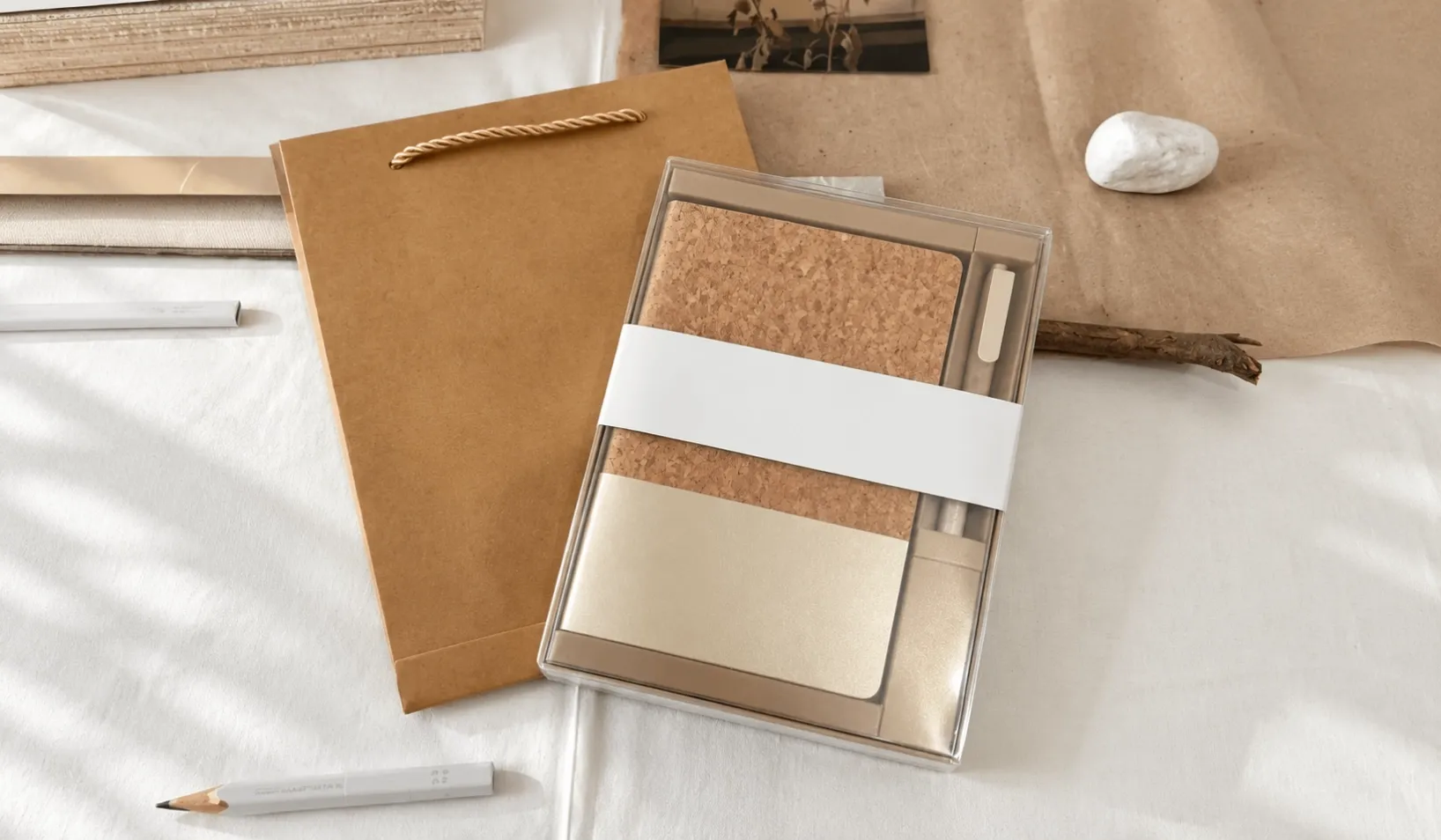
"We need 500 corporate gift sets for our event" sounds like a straightforward order. It is actually one of the trickiest quantities in corporate gifting — large enough that MOQ conflicts, assembly labor and freight structure all matter, small enough that the economics of a bulk single-product order do not apply, and tied to a fixed event date that will not move.
The short answer: at 500 sets, the order runs as a five-track project — each component produced in parallel, converging at one assembly point, then shipping as one consolidated batch. Budget the MOQ exercise first (before product selection), assemble in China rather than at the venue, use air freight for a 4–6 week runway and sea freight only when you have 10+ weeks, and work backward from the event date with a two-week buffer.
This guide covers the MOQ math that decides which products are feasible at 500, the assembly sequence and its labor math, the freight decision at this weight, and the timeline that gets 500 corporate gift sets to the venue without a last-minute emergency.
Why Is 500 Sets an Awkward Order Size?
500 sets sits between two worlds, and each side has a different constraint:
- Below the cheapest pricing tier. Many factories' best unit pricing starts at 1,000 pieces. At 500 you pay nearer the low tier — a reality to plan for, not a problem to solve.
- Above the comfort zone of hand assembly. One or two people can assemble 200 sets in a day. 500 sets is a small production operation with its own labor line, error rate and quality check.
- Heavy enough that freight mode matters. 500 multi-item sets move out of express-courier territory into air-or-sea freight decisions where the choice changes both cost and lead time.
- Small enough that MOQ conflicts bite. If three of five items have a 1,000-piece MOQ, you either re-specify items, raise quantities, or buy surplus — a decision that shapes the whole budget.
The good news: 500 is a very common order size, and suppliers who work at this volume regularly have the workflow solved — if the specification is planned around the constraints below.
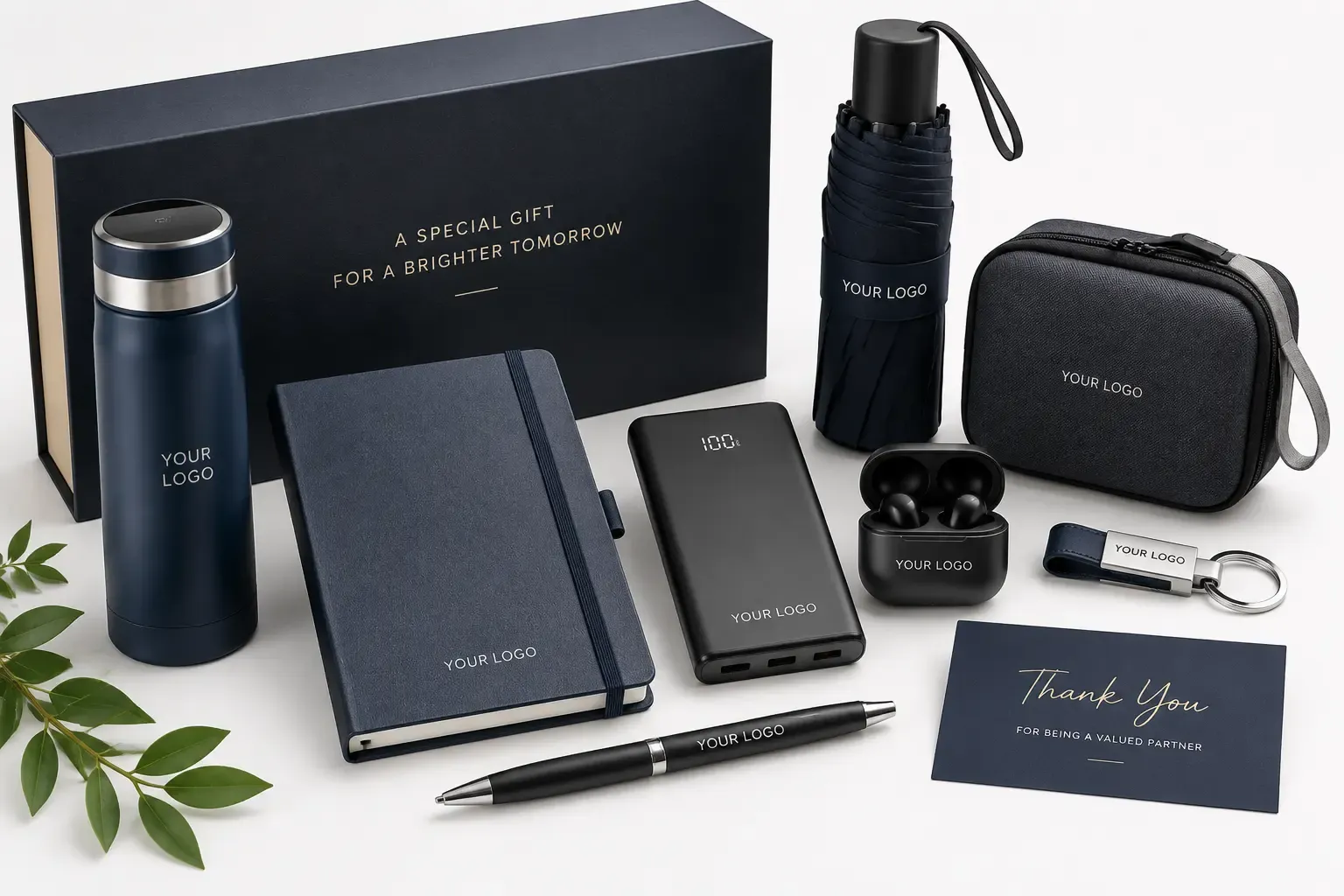
500 identical sets: each component produced in parallel, then everything converging at one assembly table.
How Do You Check MOQ Feasibility Before Choosing Products?
Before choosing products for a 500-set order, run this exercise. For every candidate item, note the MOQ for the standard product and the MOQ with customization and packaging:
Item Plan | Need | Realistic MOQ | Feasible at 500? | Fix |
|---|---|---|---|---|
Stainless tumbler | 500 | 300–500 | Yes | — |
Notebook (custom cover print) | 500 | 500–1,000 | Usually | Confirm cover print minimum |
Promotional pen | 500 | 1,000 | Conflict | Order 1,000 and stock the surplus; or pick a lower-MOQ pen style |
Custom rigid gift box | 500 | 1,000–3,000 | Conflict | Stock box with printed sleeve or label; or up-quantity for future use |
Printed insert card | 500 | Low (hundreds) | Yes | — |
Two reliable resolutions at this quantity:
- Spend the MOQ surplus on items you will reuse. Pens and notebooks are consumed continuously; ordering 1,000 pens for a 500-set event is not waste if the surplus becomes next quarter's marketing stock. Converting "MOQ waste" into "future stock" is usually the cheapest resolution.
- Pick packaging that respects the set quantity. Custom rigid boxes at 1,000+ pieces are the classic conflict at 500. A stock box with a custom-printed sleeve at the 500-set quantity preserves the branded presentation at roughly half the packaging minimum — usually the right trade at this size.
If the whole set is designed with this exercise done first, the order runs smoothly. If product selection happens first and MOQs are discovered later, the project typically loses a week and gains a re-specification. Our guides to MOQ for custom promotional products and multi-product gift sourcing cover the mechanics in depth.
How Does Assembly Work for a Set-Based Order?
A 500-set order runs as a five-track project that converges at one point — the assembly table:
- Product production (per item). Each product is produced by its factory, in parallel, on its own schedule. The production manager's job is aligning completion dates so all items land at the consolidation point within one window.
- Packaging production. Boxes, sleeves, cards and inserts run in parallel — the packaging factory is a separate production line with its own lead time.
- Consolidation. All items arrive at one point, counted and checked against the approved sample.
- Set assembly. Products are inserted into boxes with the insert; cards added; boxes closed. At 500 sets this is a small manual operation: roughly 100–200 sets per worker-day for simple sets, slower with complex inserts.
- Final check and pack-out. Assembled sets are counted, spot-checked and packed into export cartons.
Two quality points specifically matter for set-based orders at this scale:
- Count components before assembly, not after. If the pen shipment arrives 40 units short, that is discovered best at the consolidation gate — not at the end of an assembly run.
- Spot-check assembled sets. A percentage check of finished sets (every element present and positioned) catches omissions before cartons close. The classic assembly error — one item missing from a set — is discovered by a recipient.
Where Should Assembly Happen: China or the Venue?
This decision is made at the design stage, not the shipping stage. Three options:
Assembly Location | Cost Structure | Best When | Risks |
|---|---|---|---|
At the factory (China) | Labor cost lowest; freight volume highest (assembled sets) | Presentation quality matters; venue has no time or staff for assembly | Shipping damage to assembled boxes; needs protective cartons |
Flat-packed, assembled at venue | Freight volume lowest; venue labor cost | Venue team can assemble days ahead; boxes unfold into shape | Missing components discovered on-site; no re-run possible |
Flat-packed, assembled at a local hub | Middle: lower freight than assembled, labor at destination | A local partner/agent can assemble and deliver to venue | Adds a coordination layer and a local cost line |
For most event programs, factory assembly is the default — the assembly happens where the quality control is, and the sets arrive ready for the table. Flat-packing only wins when the venue team is reliable, can work days in advance, and the per-carton freight savings are significant (usually meaning a sea-freight timeline).

Sets packed in their presentation boxes — the assembly and quality check happen where the packing does.
How Should You Ship 500 Sets to the Event?
At 500 assembled sets, the freight decision has real cost consequences:
Mode | Typical Transit | Best When | Notes for 500 Sets |
|---|---|---|---|
Air express | 3–7 days door to door | Very tight deadline, high value density | Per-kg cost high; 500 multi-item sets are usually too heavy to be economical unless small and light |
Air freight | 1–2 weeks | Moderate deadline | Common choice for 500 sets with a 4–6 week event runway |
Sea freight (LCL) | 4–8 weeks | Comfortable runway, cost priority | Lowest cost per unit; the timeline must include 6–8 weeks for this leg alone |
Packing decisions that cut freight cost and breakage:
- Protect the presentation box. If the box holds drinkware, the carton needs dividers or foam. Dented boxes are the most common quality complaint on assembled-set orders.
- Decide flat vs assembled per design (see the assembly table above) — this is a design-stage decision that changes freight volume per carton.
- Label cartons at the case level. Cartons marked with quantity per carton and set SKU reduce receiving confusion at the venue — a real cost when venue staff handle the boxes.
- Ship to one address, not 500. Unless the event is a distributed giveaway, consolidate to the venue or one local address. Direct-to-recipient shipping for event sets multiplies freight and customs work for no benefit.
How Long Before the Event Should You Order?
The event date is fixed; anchor the plan to it and work backward. Here is the realistic sequence at 500 sets, mid-complexity:
Stage | Duration (500 sets) | Notes |
|---|---|---|
Product/spec selection and MOQ check | 3–7 days | Run the MOQ exercise above; finalize the item list and packaging spec |
Sampling | 2–3 weeks | All item samples in parallel; one combined review round |
Production (all items + packaging) | 3–5 weeks | Schedules aligned to finish within one window |
Consolidation + assembly + check | 4–7 days | Assembly at ~100–200 sets/worker-day; add days for complex inserts |
Shipping | 2 weeks (air) / 6–8 weeks (sea) | Add customs clearance and local delivery to the venue |
Total (air freight) | 8–12 weeks | Plus a two-week buffer before the event date |
Total (sea freight) | 14–20 weeks | Only for events with a long confirmed runway |
Two planning rules that prevent last-minute emergencies:
- Set the internal deadline two weeks before the event, not on it. Venue access windows, local delivery booking and on-site fixes all need days. A shipment that arrives the morning of the event has no recovery path.
- Book production around the season. If the event lands near Chinese New Year or Q4, add weeks — our guide to corporate gift lead times covers the seasonal calendar.
What Is the Practical Checklist for a 500-Set Order?
A one-page checklist that keeps the project on rails:
- MOQ exercise done before product selection — every component checked against the 500 quantity with a documented fix for conflicts.
- One approved sample per component — plus one fully assembled reference set that stays with the supplier as the assembly standard.
- Assembly location decided — factory, venue or local hub, documented with who does the labor and who counts the output.
- Freight decision locked with the runway — air vs sea decided against the event date minus buffer, not the other way around.
- Carton-level packing list — quantity per carton, set SKU, and a case count that matches the shipping documents.
- Spot-check plan for assembled sets — a defined sample size and a pass/fail list (all items present, no damage, cards inserted).
- Venue delivery logistics confirmed — receiving window, who signs, and where 500 sets are staged before the event.
- Post-event surplus plan — decide what happens to unopened sets and MOQ surplus before production, not after.
Frequently Asked Questions
What are good gift sets for employees at this quantity?
At the 500-set scale, gift sets for employees work best built from components that are feasible at the quantity: drinkware (typically 300–500 MOQ), notebooks with a printed cover, and a stock box with a printed sleeve rather than a custom rigid box. Sets combining one drinkware item, a notebook and a small accessory hit the value perception without triggering the packaging MOQ conflicts described above. The set's item count matters less than the mix: one substantial item plus practical complements.
How much does a 500-set order cost per set?
Per-set cost depends on the component tier, but the structure is consistent: components make up the bulk of the cost, packaging adds roughly 8–15%, factory assembly adds a labor line (small for simple sets), and freight adds per-kg cost that swings with mode. The reliable way to budget: decide the per-set product budget first, then check MOQ feasibility, then add packaging, assembly and freight. Our guide to corporate gift costs covers the full cost structure.
What are common mistakes on orders of this size?
Four repeat offenders: choosing products before checking MOQs (causes a late re-specification); custom rigid boxes at 500 units (the classic 1,000+ MOQ conflict — use a stock box with printed sleeve); assembling at the venue without a component count at the factory (missing pieces discovered on-site); and shipping door-to-door to a tight date (no buffer for customs delays; add two weeks).
Should assembly happen in China or at the destination?
Factory assembly in China is the default for most event programs — quality control is where the labor is, and sets arrive ready to place. Flat-packed with local assembly wins only when the destination has reliable labor, days of lead time, and a sea-freight timeline where per-carton savings are significant. The decision is made at the design stage because it changes packaging, freight volume and the quality-control plan.
How long before the event should I order 500 gift sets?
Plan 8–12 weeks for air freight and 14–20 weeks for sea freight, from project start to event delivery, plus a two-week buffer. The sequence: 1 week selection and MOQ check, 2–3 weeks sampling, 3–5 weeks production, about a week for assembly and checks, then 2 weeks (air) or 6–8 weeks (sea) shipping with customs. Events near Chinese New Year or Q4 need extra weeks.
Can the supplier deliver directly to the event venue?
Yes — and for most events that is the cleanest option: one consolidated shipment to one venue address, with the local delivery leg arranged by the supplier's forwarder or your sourcing partner. Ask the supplier to confirm the venue receiving window, who signs on delivery, and where the sets are staged before the event. Direct-to-venue avoids any second handling of 500 assembled sets, which is where boxes get dented.
What should we do with leftover sets after the event?
Decide before production. Usual routes: keep them for staff appreciation or future events (check storage and packaging durability), hold them as client gifts if the branding is evergreen, or send them to remote employees. What you should not do is leave the decision until after the event — unopened MOQ surplus is the most common way event gifting budgets quietly leak.
Next Step
A 500-set event order comes down to four decisions made in order: run the MOQ feasibility exercise before choosing anything; assemble where the quality control is (usually the factory); pick the freight mode against the actual runway with a two-week buffer; and lock the checklist — samples, packing list, spot-check plan, venue logistics and surplus plan — before production starts.
If you are planning gift sets for an event, send us your quantity, event date and target budget per set — we will confirm MOQ feasibility across the component list, propose the set structure that fits the budget, and quote production, assembly and freight with the timeline anchored to your event date. You can also browse our product categories to shortlist the set components.