
Oct 12, 2026Gift Ideas
How to Choose Client Gifts in Bulk
How to plan and source bulk client gifts from China — recipient tiering, products that survive client judgment, personalization options, packaging by delivery method and compliance rules by industry.
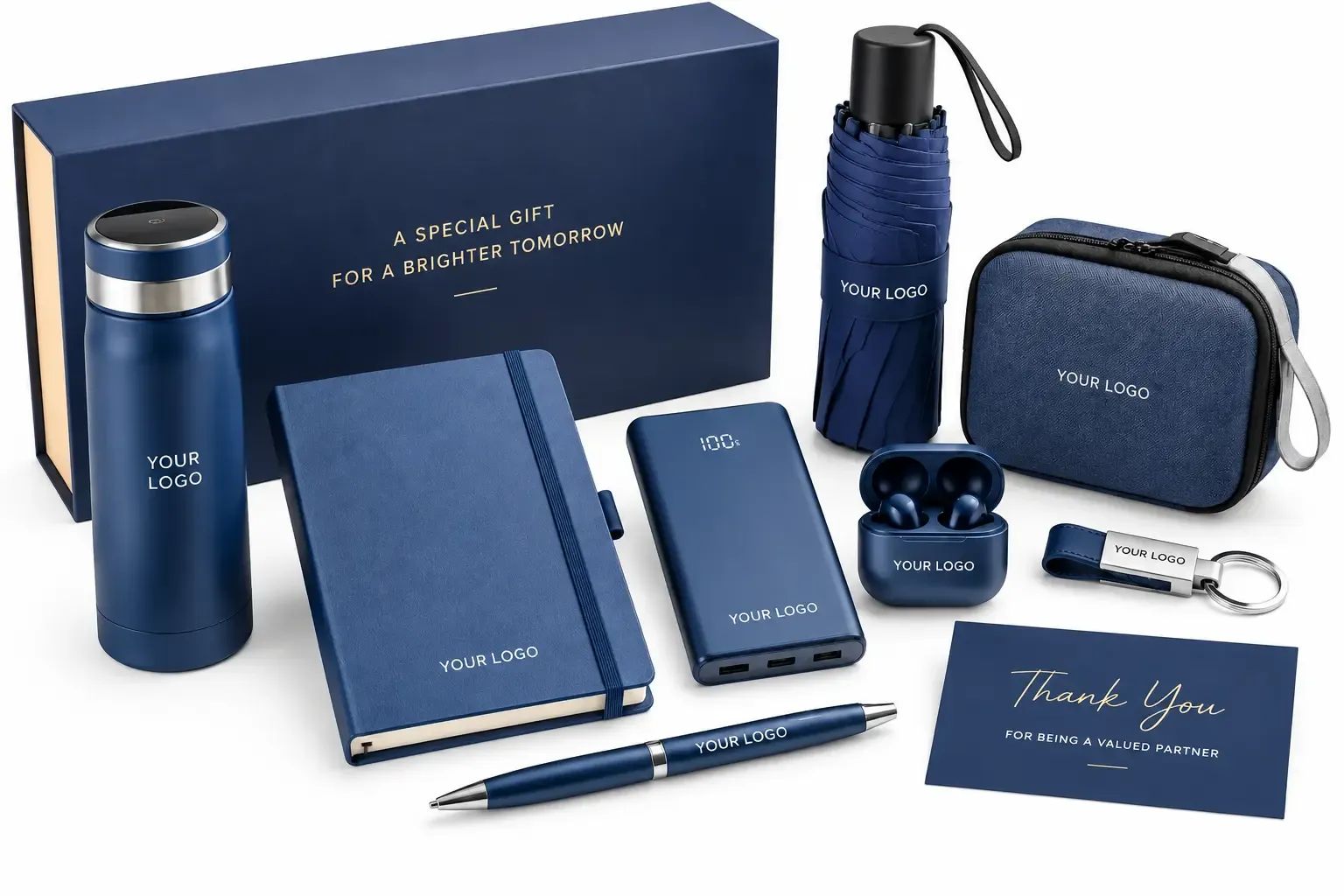
Client gifts sit in a more demanding category than employee gifts: the recipients are external, their expectations are set by years of doing business with you, and the gift is read as a statement about the relationship. A client gift that feels generic or cheap says something about how the company values the account — which is a much more expensive outcome than the gift's unit cost.
This guide covers how companies plan and source bulk client gifts from China: segmenting recipients by relationship value, choosing products that survive the client's judgment, the personalization decisions that matter, packaging expectations for business gifts, and the compliance rules that vary by industry.
Segment First: Not All Clients Should Get the Same Gift
The defining feature of a client gift program is that recipients differ enormously in value. Treating all clients identically either overspends on low-value contacts or underspends on the relationships that carry the revenue. A practical segmentation:
Segment | Who | Gift character | Presentation |
|---|---|---|---|
Tier 1: Strategic accounts | Key accounts, long-term partners, top revenue | Premium, ideally with some customization or personalization; quality that lasts | Custom packaging, possible personal note; often hand-delivered |
Tier 2: Active clients | Ongoing clients, regular contacts | Quality mid-tier: branded drinkware, bags, desk items | Branded packaging; shipped or delivered |
Tier 3: Contacts and prospects | Meeting contacts, leads, conference connections | Practical, branded items with genuine utility | Simpler packaging; often distributed at events |
Two rules make segmentation work. First, decide the tier before choosing products — the products differ across tiers, and starting with a product means designing the tiers around it. Second, keep a consistent visual identity across tiers (same brand treatment, complementary product families) so that when clients compare notes — and they do — the program reads as one coherent gifting strategy rather than random purchases. Our guide to trade show giveaways covers the event-tier logic that overlaps with Tier 3.
Products That Survive the Client's Judgment
Clients judge gifts faster than employees and more cynically: they know companies buy in bulk, so the gift's quality and thoughtfulness are read as signals. The categories that consistently work for client gifts:
For Strategic Accounts (Tier 1)
- Premium drinkware — high-end insulated bottles, tumblers, or tea/coffee sets. Daily use, visible brand placement, and a price point that supports the relationship without appearing extravagant.
- Leather goods — notebook covers, portfolios, cardholders, luggage tags. Classic business gifting territory; engraving or debossing adds a permanent premium touch.
- Desk and office objects — quality pieces that live on the client's desk: a leather desk set, a premium pen, a desk organizer. These get seen daily, which is the point.
- Tech with genuine utility — wireless chargers, premium power banks, branded earbuds cases. Strong for tech-industry clients who evaluate the tech itself.
For Active Clients (Tier 2)
- Quality branded drinkware — insulated tumblers and bottles; the most reliable mid-tier client gift, used daily.
- Bags — laptop sleeves, briefcases, quality totes; high visibility on the client side.
- Notebooks with premium pens — the classic pairing; effective when the notebook feels better than what the client would buy themselves.
- Desk accessories — organizers, charger stands, branded mousepads for hybrid-working clients.
What Usually Fails
- Cheap items under the guess-the-brand threshold. A pen so light it feels disposable, or a bag that creases, actively devalues the brand on a client's desk. At client level, cheap is worse than absent.
- Over-the-top luxury. For many corporate cultures — and many compliance policies — a very expensive gift is a problem rather than a gesture; it can trigger gift policy limits or create discomfort. Premium quality inside a defensible price range is the professional standard.
- Generic "executive gift" sets with no tie to your business or the relationship — obvious catalog items read as no thought at all.
- Items requiring effort or space. Clients do not want gifts that demand attention, maintenance or storage.
Personalization: Where It Earns Its Cost
In client gifting, personalization does more work than in any other category — it converts a bulk item into a relationship signal. The options, in rising order of effort:
- Company logo only. The baseline for Tier 2 and 3; simple, scalable, unambiguous.
- Client's company name or logo alongside yours. Strong for Tier 1: a custom item co-branded with the client's own brand reads as a partnership artifact rather than a vendor giveaway. Requires collecting the client's logo file — and, occasionally, the client's approval.
- Individual names or initials. The most personal option: useful for strategic account contacts, where the name printed on a leather item or engraved on a pen makes the gift personal. Effortful — collect names in a clean list, verify spelling, and expect no recycling of misprinted units.
- Timing/occasion note. A printed card referencing the relationship milestone (partnership anniversary, project success) does the work of a personal touch at lower cost than custom product work.
Practical routing: reserve individual-name personalization for Tier 1 contacts you can list precisely; use co-branding for Tier 1 accounts where you cannot collect names; keep Tier 2–3 on company logo only. This keeps the effort where the relationship value justifies it.
Packaging: Presentation Is Not Optional for Clients
For employee gifts, presentation is pleasant; for client gifts, it is part of the message. A client receives fewer branded boxes than employees and is more attuned to what the packaging signals. The practical standards:
- Tier 1: custom rigid box or premium branded packaging, often with a card insert; sometimes hand-delivered rather than shipped.
- Tier 2: branded box or sleeve — clearly branded, not just a plain carton, and shipped safely.
- Tier 3: branded packaging if the context supports it; practical distribution packaging otherwise (conference handouts, bulk deliveries).
For gifts that ship directly to clients (rather than being handed over at a meeting), the packaging must function as an outer shipping protection and as presentation: a shell outer carton protecting the branded inner box is the standard pattern, and it requires its own size and durability decisions. See our guide to custom corporate gift packaging for the structural options.
The most common client-gift packaging mistake is a mismatched scale: a beautiful box arriving dented by courier, or a presentation gift shipped in a plain brown carton that was never designed to be seen. Both are packaging decisions made at the wrong stage — the distribution method should decide the packaging, not the other way round.
Client Gift Budgets and Compliance
Client gift budgets vary with company size, industry and market, and they are usually set per recipient tier rather than per product. Two planning constraints shape them beyond budget:
- Industry rules. Healthcare, financial services, government contracting and regulated sectors often cap gift value, require disclosure, or prohibit gifts to certain recipient categories. Some public-sector clients cannot accept gifts above a token value at all. Confirm the rules for your clients' markets before ordering — a returned or refused gift is a first-order problem.
- In-house policies. Many large clients have their own gift acceptance policies and their procurement and finance teams may see the gift records. The practical approach: keep client gifts at a value that is comfortably within reasonable business practice, and use quality rather than price to carry the message.
A second practical note on volume planning: client gift counts move — accounts open and close, contacts change, and lists arrive late from sales teams. Build in a buffer above the current list (commonly 10–15% for Tier 1, less for larger tiers where stock can be carried to the next cycle) and keep any surplus branded stock for future gifting rather than marking it to a date or event.
Timelines and Distribution
Client gift programs share the general lead-time structure of any custom order from China — selection, sampling, production, inspection, shipping (see our guide to corporate gift lead times) — with two client-specific considerations:
- The delivery date is usually tied to a business moment: the year-end, a contract anniversary, a meeting where the gift will be handed over, or a conference where contacts gather. Work backward from the handover moment, not from the order date.
- Distribution logistics are more complex than for employees. Client gifts often go to many locations — a handful of hand-deliveries, some office shipments, some home addresses for contacts who are remote. Each destination is a small fulfillment task: correct address, correct recipient, ideally with a tracking mechanism or a delivery confirmation. For anything beyond a handful of destinations, plan the fulfillment model (who ships, how addresses are collected, how delivery is confirmed) before the production order is placed.
The reason this belongs in the planning conversation early: if client gifts will be shipped individually to home addresses, the packaging and the fulfillment model are different from handing out boxes at a meeting — and the packaging decision, made late, is the one that cannot be reversed without repeating the sample.
Frequently Asked Questions
What are good bulk client gifts?
Premium and practical items that clients keep in sight: quality drinkware (insulated bottles, tumblers), leather goods (notebook covers, portfolios, cardholders), desk pieces and premium pens, and useful tech accessories. The pattern behind these is daily visibility plus durable quality — a gift that lives on the client's desk or in their bag keeps your brand present far longer than an item that gets stored away.
How much should a company spend on client gifts?
Spending is normally set by tier rather than a single number: strategic accounts justify more than occasional contacts, and the mid-tier is where most programs concentrate. Because client gifts are read as a relationship signal, underspending on tier-one accounts is the more common error than overspending — but keep values within your industry's compliance norms. Set a per-tier budget including packaging and delivery, then choose products that fit inside it, rather than starting from products.
Is it OK to give the same gift to all clients?
The same program with tiered products works better than identical gifts at all levels. If all clients receive literally the same item, the strategic account receives no signal of its status — one of the few things a client gift is for. Keep a consistent identity across tiers (brand treatment, category family), vary the value and presentation by tier, and be explicit internally about the segmentation so sales teams distribute the right gift to the right account.
How do compliance rules affect client gifts?
In regulated industries (healthcare, financial services, government, and often public-sector clients) gifts are subject to value caps, disclosure requirements or outright prohibitions. Some recipients must decline gifts above nominal value. Confirm the applicable rules before ordering — for the recipient's industry and, where relevant, their in-house policy — and keep a documented record of what was given to whom. A rejected or non-compliant gift creates more work than the gift was worth.
How do I handle client gift distribution to multiple locations?
Decide the fulfillment model before the production order: who collects delivery addresses, who ships (the supplier directly to each client, a fulfillment centre, or your own office), and how delivery is confirmed. Direct shipping to home addresses requires packaging built for courier transit and a clean address list; hand-delivery at meetings requires assembled, presentation-ready boxes. The distribution model determines the packaging specification — so it belongs in the earliest planning conversations, not after production.
Next Step
Bulk client gifting comes down to five decisions made in order: segment recipients by relationship value, choose products per tier, decide the personalization level per tier, set packaging and delivery by distribution method, and confirm compliance rules for your clients' markets and industries.
If you are planning a client gift program, send us your client tiers, quantities and delivery model — we will propose the product and packaging structure per tier, confirm the timeline to your handover date, and coordinate production, packing and distribution. You can also browse our product categories for options by tier.