
Oct 22, 2026Gift Ideas
Employee Recognition Gifts: Service Awards and Milestones
How to run an employee recognition gift program sourced from China — milestone tiers, choice sets, budget structure, personalization workflow, and tax thresholds.
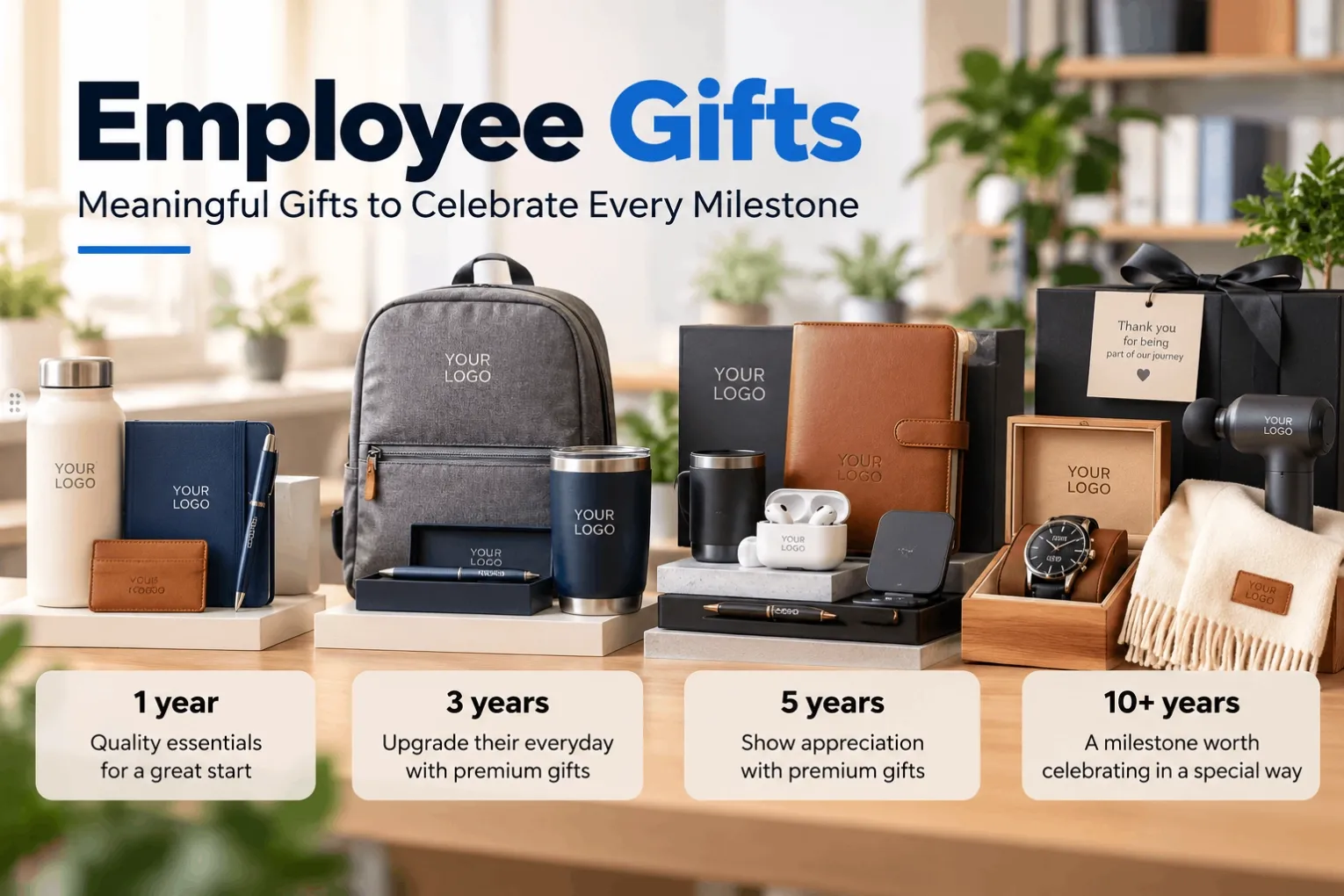
Employee recognition gifts mark specific achievements — years of service, goals reached, projects delivered — which makes them a different procurement category from general appreciation or holiday gifting. Recognition gifts are event-driven and tied to a person, so they need to be available on demand, consistent in quality, and visibly tiered so the recognition reads as earned.
The short answer: build the recognition program around service milestones (1, 3, 5, 10 years) as the predictable backbone, add performance and peer-recognition touches on top, standardize one gift per milestone tier with a small choice set, and manage inventory so a milestone gift is never late or out of stock. For companies sourcing from China, the practical structure is the same as any employee gifting program: one supplier, one catalog, planned annual volumes.
This guide covers how recognition gifting differs from appreciation and holiday programs, the milestone tiers that work, the choice-set model, budget structure, and how to source the program from China.
How Is Recognition Different from Appreciation and Holiday Gifts?
Three programs are often lumped together as "employee gifts," but they have different triggers and requirements. The distinction matters because recognition gifts specifically must feel earned:
Program | Trigger | What Success Looks Like |
|---|---|---|
Recognition gifts | A specific, nameable achievement — milestone, target, contribution | The recipient knows exactly what the gift is for; peers can see the link |
Appreciation gifts | Ongoing effort; no single event | Warmth and inclusion; covers everyone |
Holiday gifts | The calendar | Collective thank-you; arrives on time for everyone |
The practical consequences of the distinction:
- Availability on demand. Recognition moments are not scheduled: a project ships, a person hits five years, a team delivers against odds. The program must be able to deliver within days of the moment — which means a stocked catalog, not a per-order production cycle.
- Visible tiering. A 5-year award should read as different from a quarterly spot award. The tiers should map to milestone values employees can anticipate (anniversary programs are usually published) so the gift feels like part of a system, not a manager's whim.
- A name, a story, a note. Recognition gifts are handed over with a specific story about the achievement. The gift is the artifact; the story is the value.
Our employee appreciation guide covers the appreciation side; this article deals with the recognition model.
What Are the Standard Milestone Tiers?
Service awards form the predictable core of a recognition program because they can be planned a year ahead from headcount data. The tiers that work across company sizes:
Milestone | Gift Character | Notes |
|---|---|---|
1 year | A quality item — drinkware, notebook and pen set, small leather piece | Often the first branded "good" item an employee receives; set the quality bar here |
3 years | Upgrade tier — premium drinkware, branded backpack, desk piece | The volume tier for most companies; personalization (name engraving) is standard |
5 years | Premium single item or set — leather goods, premium tech, gift set | A visible step up; often presented at company meetings |
10+ years | High-end item, often with individual choice | Small quantity; worth offering a choice set — a decade of service deserves taste |
Two design rules. First, keep the tiers visually related — same brand treatment, a family of products — so the difference reads as "next level" rather than "different program." Second, publish the tiers internally: employees who know that year five brings the premium tier can anticipate the moment; when the program is a surprise, the gift does less work.
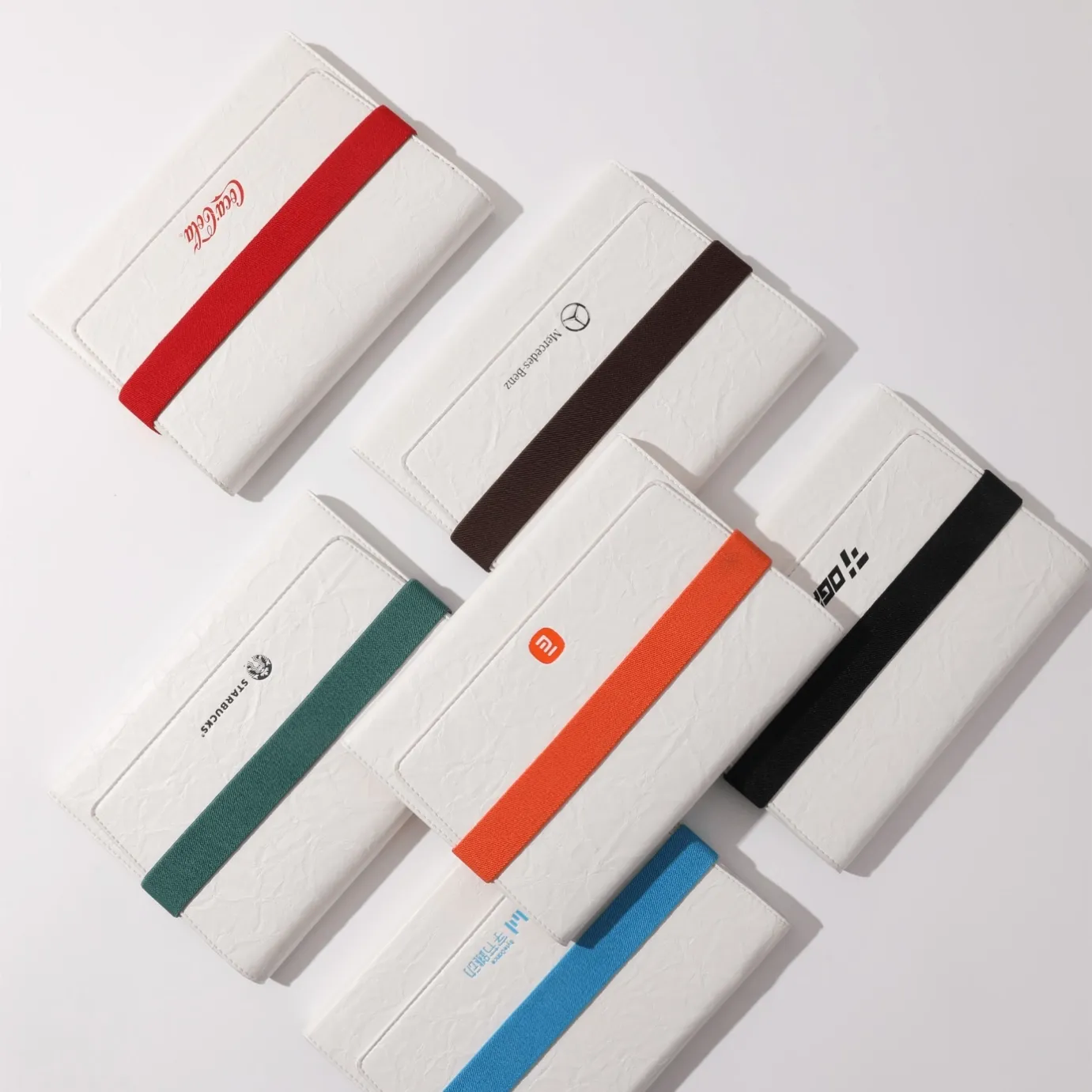
Milestone tiers work best as a family: the same design language, stepped up in quality at each level.
Should Recognition Gifts Offer a Choice?
Recognition is personal — and at the same tier, people prefer different things. The choice-set model handles this without losing logistics control:
Model | How It Works | Best For | Trade-offs |
|---|---|---|---|
Single standard gift | One item per tier for everyone | High-volume tiers (1-year, 3-year) | Simplest logistics; some recipients get an item they won't use |
Choice set (2–3 options) | Two or three items at the same tier value; recipient picks one | 5-year and above | Needs a selection step in the program process; stock is held at each option |
Gift card / points | Recipient chooses from a platform | Remote-heavy organizations | Loses the physical brand moment; check tax treatment per market |
A practical hybrid: single standard gift at the 1- and 3-year tiers (where volume is high), choice set at 5 years and above (where the quantity is small and the moment is big). Personalization — name, years, date — belongs on every tier from year three up: engraving on the item or printing on the certificate or card.
How Do You Budget a Recognition Program?
Recognition budgeting starts from headcount data, which makes it one of the most plannable programs in the gifting calendar:
- Milestone forecast. From your HR records: how many employees will hit each milestone next year. This gives exact quantities per tier — the rare case where gifting quantities are known a year ahead.
- Per-tier unit budget. Set by milestone, in step increases (each tier about one quality level above the last); count engraving, packaging and delivery in the budget.
- Spot recognition reserve. A small budget line managers can draw on for performance moments — without it, "we'll recognize you with a gift" becomes a promise that dies in procurement.
- Stock buffer. Holding one tier's worth of the most common milestone gifts means a recognition moment never waits on production.
Tax treatment runs through everything: as covered in our employee appreciation guide, many jurisdictions treat employer gifts above their thresholds as taxable income to the employee — commonly cited examples include the UK's £50 per-employee exemption and Germany's €50 threshold, while the US treats most employee gifts as taxable wages unless a specific exemption (like certain achievement awards) applies. Set per-tier values in line with each market's thresholds and keep records.
How Do You Source Recognition Gifts from China?
Recognition programs have a specific sourcing requirement: the catalog must be reorderable on demand, with personalization, at small-batch quantities. The working structure:
- Choose stock items for the core tiers. The 1-year and 3-year items are the volume backbone — stock products with logo branding reorder reliably and accept fast personalization rounds. Fully custom items make sense only at the top tiers where quantities are small.
- Confirm the personalization workflow. Name engraving or printing adds a per-item step; ask how the supplier handles batch personalization (your HR team sends names in batches; the supplier engraves and ships). Our logo printing methods guide covers the technique options and their durability.
- Set reorder terms for every catalog item. Lead time, minimum quantity, setup reuse, price validity — the same reorder discipline as any program, covered in our MOQ guide.
- Plan delivery to distributed teams. If employees work across sites or remotely, request per-destination shipping and transit-grade packaging options, as covered in our welcome kits guide.
For the quote, send the milestone forecast (quantities per tier for the year), the catalog direction per tier, the personalization requirements, and the delivery pattern. You can also browse our product categories to start the catalog, and the corporate gift sourcing service for the end-to-end process.
The recognition catalog runs on reorderable stock items — the same specification delivered consistently, year after year.
Frequently Asked Questions
What are good employee recognition gifts?
The items that fill recognition catalogs reliably: premium drinkware, leather goods (notebook covers, cardholders, portfolios), quality backpacks and bags, desk pieces, and tech accessories — chosen one step above the company's everyday swag and personalized with the recipient's name or milestone. The gift's job is to be used and kept: a recognition item that sits in a drawer fails even if it was expensive.
How much should service awards cost?
Structure the tiers around clear step increases (each milestone about one quality level above the last), and set each tier's value in line with your market's gift-tax thresholds so the gift doesn't create a tax event for the recipient. The most informative benchmark is internal: the tiers should be visibly distinct to employees, and consistent year over year. The per-tier budget should include personalization, packaging and delivery — not just the item.
What is the difference between recognition and appreciation gifts?
Recognition marks a specific, nameable achievement (a milestone, a target, a delivered project) — it must feel earned, arrive promptly, and be visibly tiered. Appreciation covers ongoing effort without a single trigger — its job is warmth and inclusion across everyone. Many companies run both programs from one catalog but keep the logic separate, so the same item is not used for both purposes in the same year.
Should recognition gifts be personalized?
From the three-year tier up, yes — a name, the milestone years, or a date transfers a catalog item into a personal award, and the cost is modest at program volumes. At the 1-year tier, personalization is optional (volume is highest); a printed card with a specific note does most of the personal work. The operational requirement is a clean personalization workflow between your HR team and the supplier — batched name lists, one engraving run per batch.
How do we keep milestone gifts from arriving late?
Three mechanics: forecast milestone quantities from HR data a year ahead; hold a stock buffer of the most common tier items; and confirm reorder lead times and minimums for every catalog item when it joins the program. The classic failure is treating each milestone as a fresh order — by the time the request reaches the vendor, the moment is weeks past. Planned volumes and stocked items keep recognition immediate.
Next Step
An employee recognition program comes down to four decisions: a published milestone tier structure as the backbone, one standard gift or choice set per tier, a stocked catalog with personalization workflow, and a per-tier budget set with tax thresholds in mind.
If you are building or refreshing a recognition program, send us your milestone forecast, tier structure and catalog direction — we will propose items per tier, quote annual volumes at volume tiers, set up the personalization workflow, and keep the specification on file so every recognition moment delivers on time. You can also browse our product categories to start the catalog.