
Oct 18, 2026Sourcing Guides
Corporate Swag: A B2B Program Guide
How to run a corporate swag program sourced from China — the four swag jobs, core catalog structure, budget models, and the procurement discipline that prevents waste.

Corporate swag — branded merchandise for employees, clients and events — has become a standard line item in US marketing and HR budgets, and the sourcing question has shifted from "should we buy swag" to "how do we run a swag program that doesn't waste money." That shift is what this guide addresses: not a list of cute items, but the operating model for buying branded merchandise at company scale.
The short answer: define what the swag is for before choosing items (recruiting, retention, client gifting and event visibility each want different things), standardize a small core catalog instead of buying ad hoc, order at volume tiers from one supplier so costs and quality stay consistent, and manage reorders with the same discipline as any procurement category. Companies sourcing from China get the best unit economics when the whole program runs through one production partner.
This guide covers the four jobs swag does, the core catalog structure, budget models, the quality mistakes that sabotage programs, and how to source a swag program from China.
What Is Corporate Swag, and Who Is It For?
Corporate swag (also called company swag, branded swag or corporate merchandise) is branded merchandise a company gives away rather than sells — to its own employees, to clients and prospects, and at events. It differs from promotional products only in emphasis: "swag" is the colloquial term used by the marketing and HR teams who run these programs, and modern swag programs tend to favour fewer, better-quality items over the old model of maximum logo coverage.
The four common programs, each with a different audience and success measure:
Program | Audience | Success Measure | Typical Items |
|---|---|---|---|
Recruiting swag | Candidates, interns, campus hires | Offer acceptance and brand impression | Quality apparel, backpacks, drinkware |
Employee swag | Current staff (onboarding, milestones, culture) | Wear/use rate and morale signal | Apparel, drinkware, bags, desk items |
Client & prospect swag | Customers, prospects, partners | Relationship warmth; note the difference from client gifts | Premium drinkware, desk pieces, tech accessories |
Event swag | Conference and trade show attendees | Items taken and kept, brand recall | Totes, notebooks, drinkware, small tech |
The programs overlap in categories but not in requirements: recruiting swag needs to signal taste to a young audience; client swag needs a premium feel within compliance limits; event swag needs volume economics. Buying one "company swag" order to serve all four is the first mistake — see our employee gifting and client gifts guides for the program-specific logic.

A swag program is judged by use, not by logo count: the items employees and clients actually keep.
Why Do Swag Programs Fail (and What Does the Alternative Look Like)?
Most swag programs fail in one of four predictable ways:
- Ad-hoc buying instead of a program. Different teams buy their own swag from different suppliers. The result: five brands of hoodie, inconsistent logo sizes, no leverage on price, and no way to reorder. The alternative is a program owner, one core catalog, and one supplier with your brand specs on file.
- Logo-first design. When the logo is the main design element, merchandise looks like advertising and gets worn less. The alternative: pieces that stand on their own as products, with the brand integrated (a well-placed mark, a colour, a detail) rather than stamped on.
- Quantity for its own sake. Trying to hit a minimum order quantity by buying items nobody asked for fills storage rooms, not the mission. The alternative: order to program volumes and use the tier pricing that actually fits.
- No reorder path. The one hoodie everyone loves is not reorderable when production was a one-off. The alternative: standard specification, confirmed reorder terms, and a stock buffer for the items that are always in demand.
Each fix is a procurement decision, not a design decision. That is why swag programs improve fastest when they are treated like any other vendor-managed category: a short catalog, a volume plan, and a reliable supply partner.
What Should a Core Swag Catalog Include?
The starting structure that covers most programs is a five-item core catalog, with program-specific additions:
Category | Role in the Program | Volume Pattern |
|---|---|---|
Drinkware | The everyday object — used daily, logo visible, replaces disposable cups | Highest volume; the anchor item |
Apparel | The identity item — worn outside the office when the design earns it | Volume with size distribution; hardest to manage |
Bags | The carrier — used to transport everything else | High volume; good event and onboarding item |
Notebooks & pens | The work items — used in meetings; brand seen in every meeting | Steady reorder volume |
Tech accessories | The perceived-value tier — chargers, cable organizers, stands | Lower volume; premium moments |
How Do You Pick Within Each Category?
- Drinkware: insulated stainless steel remains the perceived-value standard. Choose a size people actually carry (many companies offer two SKUs: an everyday tumbler and a larger bottle for the gym or commute).
- Apparel: quality blanks in contemporary fits outperform elaborate designs. The piece earns wear when it looks like something the person would buy — the logo is a detail, not the design. Always collect sizes; see our employee gifts guide for the sizing caution.
- Bags: totes for events and onboarding; laptop-capable backpacks or sleeves for teams that commute.
- Notebooks & pens: hardcover notebook plus a metal-bodied pen. Both items reorder cleanly and carry the brand into every meeting.
- Tech: wireless chargers and power banks are the reliable picks for tech companies; mind certification and battery shipping rules for global orders.
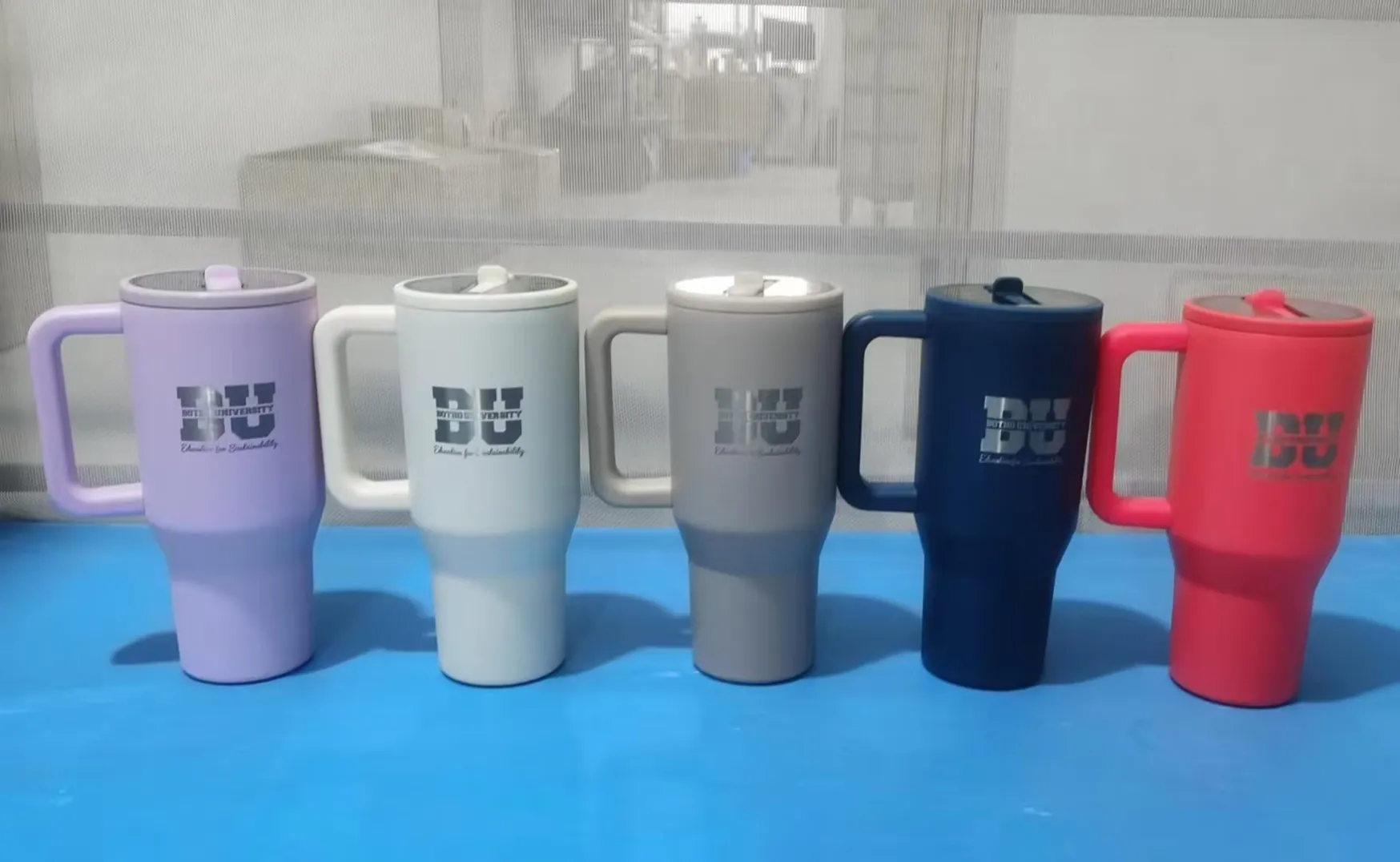
The core catalog approach: a few standardized items, each tested as a product before it becomes a swag item.
How Should You Budget a Swag Program?
Swag budgets run on two numbers: per-head allowance and event/program allocations. A workable model:
Budget Line | Basis | Notes |
|---|---|---|
New-hire swag | Expected hires per year × per-item budget | Welcome kit structure; see our welcome kits guide |
Annual employee swag | Headcount × annual allowance | Often one quality item per year; volume tier pricing helps |
Recruiting swag | Event schedule × expected candidates | Premium small items; quality over quantity |
Event allocation | Per event, from registration numbers | See our conference and trade show guides |
Three cost levers worth knowing. First, volume tiers — the same item at 500 pieces vs 2,000 pieces can differ substantially in unit cost; ordering a year's volume where storage allows is often cheaper than quarterly orders. Second, spec consolidation — keeping one tumbler SKU and one notebook SKU across all programs lets every order land in a better price tier. Third, setup reuse — printing screens and engraving plates are one-time costs; confirm in writing that reorders reuse them. The full cost structure is covered in our corporate gift costs guide.
How Do You Source a Swag Program from China?
The sourcing model that works best for swag has three principles:
- One supplier for the core catalog. A single production partner who holds your specifications, brand colors and past orders can quote across categories, keep quality consistent, and handle reorders without new sampling. Split across many suppliers, the same program costs more and drifts visually.
- Test items as products. Swag lives or dies by whether people use it. Approve a physical sample of every new catalog item — with branding applied — and test it in real use before committing to volume (the tumblers sealing well, the hoodie surviving a wash). Our pre-production sample guide covers the approval process.
- Run a reorder discipline. The items that carry a swag program are always in demand. Keep a stock buffer, set reorder triggers by stock level, and confirm reorder terms (lead time, minimum, setup reuse, price validity) when the item joins the catalog — the mechanics are in our MOQ guide.
For the quote, send one brief covering the whole program: the catalog with branding placement per item, annual volumes per program line, the colour requirements, and the delivery schedule. You can also browse our product categories and the corporate gift sourcing service to shortlist the catalog with us.
Frequently Asked Questions
What is corporate swag?
Corporate swag (or company swag) is branded merchandise a company gives away — to employees, clients, recruits and event attendees — rather than sells. It covers apparel, drinkware, bags, notebooks and tech accessories, and it works best run as a managed program (a small standardized catalog, volume ordering, a reorder path) rather than as ad-hoc purchases. The term is the marketing and HR equivalent of "promotional products."
What swag do employees actually want?
The items that show up in real use: insulated drinkware, quality bags, and apparel that looks like something they would buy anyway. Usefulness beats novelty — an item used daily carries the brand further than an eye-catching novelty item. Surveys and office observation point the same way consistently: quality blanks beat elaborate designs, and a comfortable, well-fitting piece gets worn while a cheap one stays in the closet.
How much should a company spend on swag per employee?
The structure matters more than the number: most programs run on a per-head annual allowance covering one or two quality items, plus separate budgets for onboarding, recruiting and events. The cost levers that make the number work: volume tiers, one core catalog for the whole company, and setup reuse on reorders. On the production side, the same item at higher volumes can cost meaningfully less per unit — plan annual volumes where storage allows.
Where should we buy corporate swag?
The realistic options for a US company: (1) a US-based swag platform (fast, higher unit costs, limited customization); (2) a China-based manufacturer or sourcing partner (lower unit costs, full customization, needs lead-time planning). Companies with recurring programs and custom requirements get the best economics from the second route, especially when the whole catalog runs through one supplier. The trade-off is planning: production and freight take weeks, not days.
What is the difference between swag and corporate gifts?
Swag is merchandise — practical, relatively low-cost, designed for volume distribution and daily use. Corporate gifts (client and employee appreciations) are chosen for a person or relationship, carry higher unit budgets, and are often lightly branded with personalized touches. A healthy program keeps the two distinct: swag builds presence, gifts build relationships — see our client appreciation guide for the gift side.
Next Step
A corporate swag program comes down to four decisions: define the program (recruiting, employee, client, event) before choosing items; build a small core catalog with one spec per category; order at volume tiers from one supplier with branding specs on file; and run reorder discipline so the catalog stays available and consistent.
If you are setting up or consolidating a swag program, send us your program structure, catalog direction and volume estimates — we will confirm feasibility per item, quote at volume tiers, keep your brand specifications on file, and set reorder terms so the program runs without re-negotiation. You can also browse our product categories to start the catalog.