
Oct 18, 2026Sourcing Guides
Sustainable Corporate Gifts: The Complete Sourcing Guide
How to source sustainable corporate gifts from China — sustainability properties defined, the certification landscape, materials by category, greenwashing checks and honest costs.
Sustainable corporate gifts have moved from a nice-to-have to a line item buyers actively plan — and the sourcing question has changed with it. It is no longer "are there eco-friendly options?" (there are hundreds) but "how do we buy sustainable gifts without falling for greenwashing, paying an unjustified premium, or choosing materials that fail the product's actual job?"
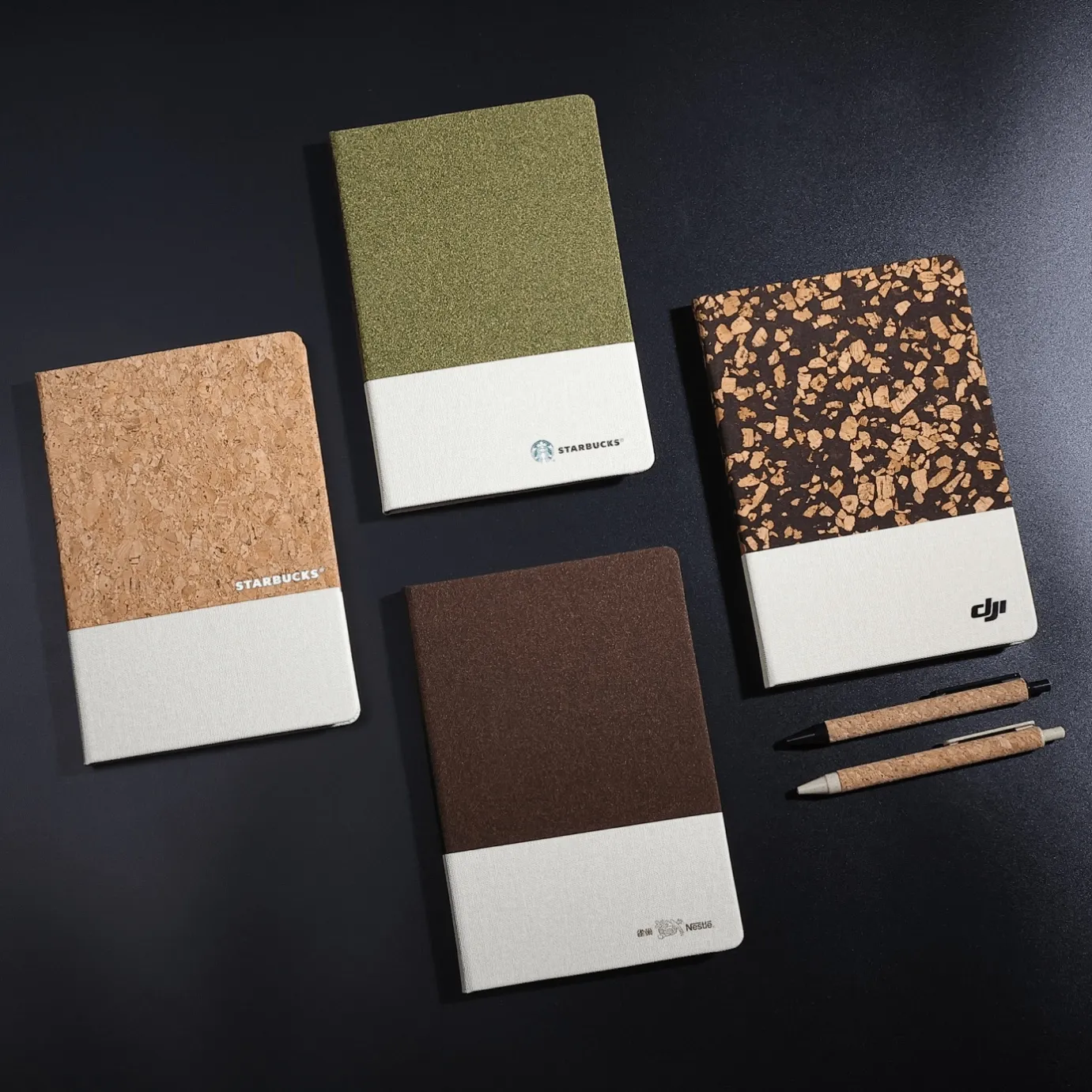
Sustainable gifting starts with verified materials — recycled content, renewable sources, and durable construction — not with a color palette.
The short answer: decide what "sustainable" means for your program before choosing products (recycled content, renewability, durability and end-of-life are different claims), verify claims against certifications rather than marketing language, choose materials by the product's function rather than by trend, and plan the cost premium deliberately — a well-chosen durable item often costs less than the "eco" alternative and outlasts it. For companies sourcing from China, the practical path is a supplier who can document materials and certifications, not just label a catalog as green.
This is the pillar guide for our sustainable gifting series. It covers what sustainable sourcing actually means, the certification landscape, material choices by product type, greenwashing risks and how to verify claims, cost expectations, and how to write a brief that a supplier can act on.
What Makes a Corporate Gift "Sustainable"?
"Sustainable" is used as a single label, but it describes several distinct properties — and a gift that has one may not have the others. Buyers who define which properties matter turn the vague question into a checklist:
Property | What It Means | How It's Evidenced |
|---|---|---|
Recycled content | The item is made wholly or partly from recovered materials (rPET, recycled cotton, recycled cardboard) | Material declarations, GRS certification, supplier documentation |
Renewable materials | Made from fast-renewing sources (bamboo, cork, wheat straw, FSC-certified wood/paper) | FSC certification for wood/paper; origin documentation for agricultural materials |
Durability / longevity | The item is built to be kept and used for years — the single largest ecological factor for most gifts | Product testing, warranty, specification (GSM, material grade) |
Recyclability / compostability | The item or its packaging can re-enter a material stream at end of life | OK Compost / DIN CERTCO for compostables; mono-material construction for recyclability |
Responsible production | Made under verified social and environmental standards at the factory | BSCI, Sedex/SMETA, ISO 14001 audits |
Giving-back component | A percentage of the purchase funds a cause (tree planting, ocean cleanup) | Partner organization documentation; be specific about amounts |
The most useful reframe for buyers: longevity is the most underrated sustainability property. A durable stainless-steel bottle that is used for five years avoids more waste than a trendy compostable item that breaks in a month. Our guide on employee gift categories employees keep covers durability from the recipient side; here it matters as an environmental argument too.
Which Certifications Should You Ask For?
Certifications are the strongest defense against greenwashing because they are verifiable. The framework that matters to corporate gift buyers:
Certification | Covers | Applies To |
|---|---|---|
FSC (Forest Stewardship Council) | Responsible forestry | Wood, paper, notebooks, packaging, bamboo products |
GRS (Global Recycled Standard) | Recycled content + chain of custody + social/environmental criteria | rPET textiles and plastics, recycled cotton bags and apparel |
GOTS (Global Organic Textile Standard) | Organic fiber + processing standards | Organic cotton apparel and bags |
OK Compost / DIN CERTCO | Industrial or home compostability | PLA items, compostable packaging, wheat-straw products |
OEKO-TEX Standard 100 | No harmful substances in textiles | Apparel, bags, any fabric contacting skin |
ISO 14001 | Environmental management system at the factory | Manufacturing facilities (supplier-level, not product-level) |
BSCI / Sedex SMETA | Social compliance audit | Factory working conditions — increasingly requested alongside environmental claims |
Two practical rules. First, ask for the certificate and the certificate number — claims without a verifiable number are marketing. Second, match the certification to the claim: an FSC certificate says nothing about recycled content, and a GRS certificate covers the material chain, not the factory's labor practices. A supplier who can produce the right certificate for the right claim is a materially different supplier from one who "has certifications."
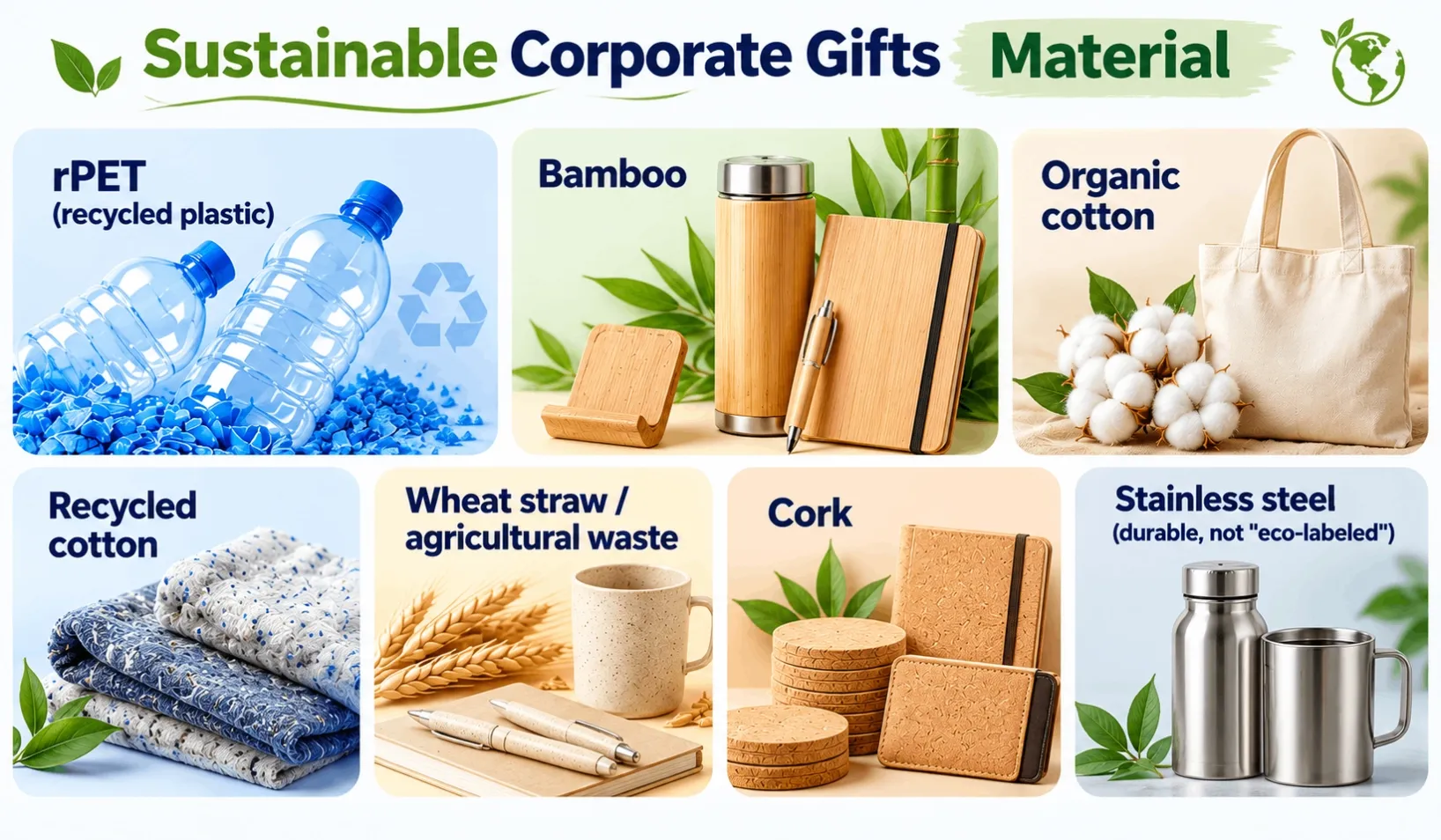
How Do You Choose the Right Material?
Material choice should follow the product's job. The comparison buyers actually need — because each material wins in some applications and loses in others:
Material | Best For | Strengths | Watch Out For |
|---|---|---|---|
rPET (recycled plastic) | Drinkware, bags, textiles, lanyards | Verified recycled content (GRS), familiar performance, good printability | Still plastic at end of life; verify actual recycled percentage |
Bamboo | Desk items, utensils, phone stands, notebooks | Fast-renewing, distinctive natural look | Not all bamboo is FSC-certified; "bamboo fiber" textiles are often viscose — a much weaker claim than bamboo wood |
Organic cotton | Tote bags, apparel | GOTS-verifiable, strong consumer recognition | Higher cost; water use is still significant even in organic farming |
Recycled cotton | Tote bags, pouches, apparel | Lower footprint than virgin cotton; GRS-verifiable | Color consistency is harder; quality varies with the recycled fiber grade |
Wheat straw / agricultural waste | Pens, small desk items, cups | Uses by-product waste; lightweight | Usually blended with PP plastic — ask for the actual percentage |
Cork | Desk pads, coasters, notebook covers, small accessories | Renewable (bark regrows), durable, distinctive | Limited product formats; less common in high-volume catalogs |
Stainless steel (durable, not "eco-labeled") | Drinkware — the workhorse category | Years of use, fully recyclable at end of life, no certification needed to be a good choice | The sustainability is in the lifetime, not the label — say so honestly |

The material does the work: reusable items with verified material content outperform "green-looking" products with unverifiable claims.
How Do You Spot (and Avoid) Greenwashing?
Greenwashing in corporate gifting has recognizable patterns — and each has a counter-question the buyer should ask:
Claim Pattern | Why It's Weak | Ask Instead |
|---|---|---|
"Eco-friendly" with no specifics | Means nothing; any product can claim it | "Which property — recycled content, renewable material, or durability — and what documents it?" |
"Made from bamboo" for textiles | Bamboo viscose is a chemically processed fiber, not raw bamboo | "Is this bamboo fiber (viscose) or bamboo wood? What certification applies?" |
"Biodegradable" without conditions | Most materials biodegrade eventually; the claim ignores the landfill reality where they actually end up | "Certified compostable (OK Compost), and in which conditions — industrial or home?" |
"Recyclable" packaging | Recyclability depends on local infrastructure, and a laminated multi-material item often isn't recyclable anywhere | "Is it mono-material? Would my recipients' local systems accept it?" |
"Carbon neutral" claims | Often a purchased offset with no reduction behind it | "What's the actual reduction, and what's offset? Which standard verifies it?" |
"1 tree planted per item" | Unverifiable at scale; the tree may not survive | "Which partner, what's the audited result, and what share of the price funds it?" |
The honest framing works better in the gift context anyway: a durable product used for years, made under ISO 14001 production, and shipped by sea instead of air — with the supply chain facts stated plainly — is a stronger sustainability story than any label. And it is verifiable. This transparency-first approach is also easier on the supplier side, as covered in our quality control guide — the same document discipline that supports QC supports sustainability claims.
How Much Do Sustainable Gifts Cost?
The cost question has three parts, and only one of them is the price premium:
- The material premium is real but often modest. Recycled materials typically add a percentage over virgin equivalents rather than multiples — but certifications (GRS, GOTS, FSC chain of custody) add administrative cost, since the supplier must maintain chain-of-custody records. Expect the certified versions of an item to cost more than the material difference alone explains. The full cost structure is covered in our corporate gift cost guide.
- Durability is the price reducer, not the premium. The comparison that matters is not "eco item vs regular item at the same price," but cost per year of use. A $6 stainless bottle used for three years costs less per year than a $3 plastic item replaced annually — and the durable option is the more sustainable one. This is why the sensible sustainable program starts with the products employees keep.
- Packaging and freight count toward the claim. A sustainable gift in plastic-wrapped, foam-padded packaging undercuts the message (and is a common recipient complaint). Ask for recycled/compostable packaging options and sea freight where the timeline allows — our custom packaging guide covers the option tiers.
A practical budgeting rule: run the sustainable program on the same per-item budget as your conventional one where possible, by choosing the categories where certified materials cost least (rPET drinkware, recycled cotton bags, FSC notebooks) and letting durability carry the story. Where the budget must move, move it deliberately and document why — the "sustainability premium" line is easier to approve than an unexplained cost increase.
What Should the Sourcing Brief Include?
Sustainability claims fail at the supplier conversation before they fail in the market. A brief that works:
- The sustainability properties you require — from the property table above: recycled content, renewable material, durability, compostability, factory certification. Name the ones that matter; everything is not achievable at once.
- Which certifications you will ask to see — and ask the supplier to state which they hold for each proposed item, with certificate numbers.
- Material preferences per category — for example: drinkware in stainless or rPET, bags in recycled cotton, notebooks in FSC paper, pens in wheat-straw blend (with stated percentage).
- Packaging requirements — recycled or compostable where feasible; mono-material where recyclability is claimed.
- The honesty line — tell the supplier you will publish the specific facts (material percentage, certification, freight mode) rather than umbrella claims, and ask them to supply exactly those facts. Suppliers who are already working this way recognize the brief immediately — our corporate gift sourcing service follows the same structure.
- Volume and timeline — certified materials sometimes carry longer lead times because documentation and specialized supply chains move slower than commodity production. Plan with the same lead-time discipline as any order (corporate gift lead times).
Frequently Asked Questions
What are good sustainable corporate gifts?
The most reliable combination is durable, verified-content items: stainless-steel or rPET drinkware, recycled cotton or GOTS organic cotton bags, FSC-certified notebooks, and cork or bamboo desk items — with recycled or compostable packaging. The test is not just material: an item that gets used for years is the most sustainable choice in its category, which is why the standard gift categories (drinkware, bags, notebooks) dominate sustainable catalogs too.
What certifications should I look for in eco-friendly corporate gifts?
Match the certification to the claim: FSC for wood, paper and bamboo products; GRS for recycled content; GOTS for organic textiles; OK Compost or DIN CERTCO for compostables; OEKO-TEX for skin-contact textiles; ISO 14001 and BSCI/Sedex for the factory. Ask for certificate numbers, not just logos — a claim you can verify is the difference between a sustainability program and a greenwashing risk.
How do I avoid greenwashing in corporate gift sourcing?
Ask specific questions and accept only specific answers: which property (recycled content? renewability? durability?), documented by which certificate number, verified by which audit? Watch for umbrella claims ("eco-friendly" with no detail), bamboo fiber described as raw bamboo, "biodegradable" without composting conditions, and tree-planting claims without an audited partner. Publishing exact facts — material percentages, certifications, freight mode — is both safer and a stronger story than any label.
Are sustainable corporate gifts more expensive?
Usually modestly — certified recycled and organic materials carry a material premium plus certification administration cost, and the certified versions of an item typically cost more than the raw material difference explains. But running the comparison per year of use reverses many cases: a durable item used for years costs less than cheaper items replaced frequently, and durability is itself the strongest sustainability property. Budget the program on the same per-item basis where possible and document any deliberate premium.
What is the most sustainable type of corporate gift?
The one the recipient keeps and uses. Longevity outweighs every material label: a quality reusable item that lasts five years prevents far more waste than a single-use "eco" product, and it carries your brand for those years. After durability, the properties that matter most are verified recycled or renewable content, responsible production (ISO 14001, social audits) and packaging that doesn't undo the message. This is the principle the rest of our sustainable gifting series is built on.
Next Step
A sustainable corporate gift program comes down to four decisions: define which sustainability properties your program requires, ask for certifications against each claim, choose materials by product function (and let durability lead), and brief the supplier with specific material, certification and packaging requirements.
If you are building a sustainable gifting program, send us your product categories, target budget and sustainability requirements — we will scope certified materials per item, provide the documentation for each claim, and quote the program with honest lead times. You can also read the rest of the series: our guide to eco-friendly swag programs and eco-friendly promotional products.